Showing posts with label Aging. Show all posts

Monday, May 18, 2020

MBTI: Working with the MBTI - Rebirth

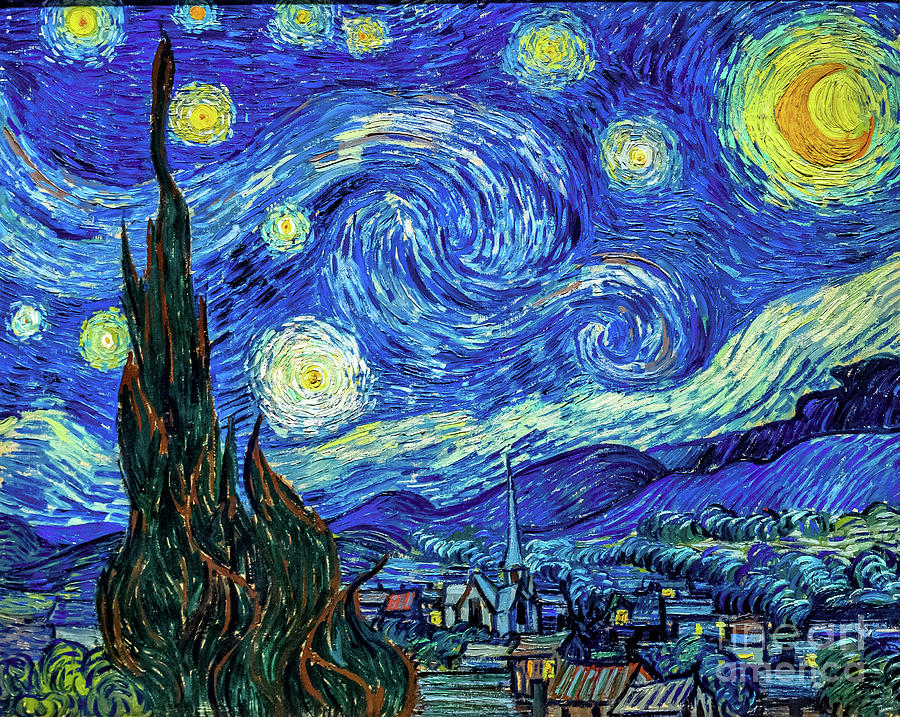
Starry Night (Vincent van Gogh)
[Image from ArcGIS StoryMaps]

I can only gaze with wonder and awe at the depths and heights of our psychic nature. Its non-spatial universe conceals an untold abundance of images which have accumulated over millions of years of living development and become fixed in the organism. My consciousness is like an eye that penetrates to the most distant spaces, yet it is the psychic non-ego that fills them with non-spatial images. And these images are not pale shadows, but tremendously powerful psychic factors.

The most we may be able to do is misunderstand them, but we can never rob them of their power by denying them. Beside this picture, I would place the spectacle of the starry heavens at night, for the only equivalent of the universe within is the universe without; and just as I reach this world through the medium of the body, so I reach that world through the medium of the psyche.

~ C.G. Jung, (from Edward Hoffman's The Wisdom of Carl Jung)


I'm going to start by telling you something about me; in my profile I talk about how I've basically spent my entire life studying psychology, and there's a very good reason for this. It's because I was looking for a way to fix myself. I had a difficult childhood, was bounced from home to home and family member to family member. Though I didn't realize it (because I'm an INTP and don't really have access to my feelings) I never understood how much this wounded me until I was already well into adulthood, but I suffered. Between that and being an introvert in an extroverted culture that looks down on introversion (this was before being an introvert became trendy with the popularity Susan Cain's book Quiet) I felt that there was something fundamentally wrong with me and was desperate to fix it.

“Neurosis is always a substitute for legitimate suffering”
― Carl Gustav Jung

I tried everything: individual therapy, group therapy, inner child work, affirmations, subliminal learning, neuro linguistic programming, and many more, too many to remember. I delved into Jung's work back in the 90's though it didn't “take” then. I had to wait until around 10 years ago for me to really get into it. By this time I had given up on psychology being able to do anything beyond very surface, psychological band-aids. No matter how many times you look in the mirror and tell yourself how awesome you are, you know the truth. You can't cognitive-behavioral-therapy your way out of what you know. So I gave up trying to fix myself and decided to become a librarian.

And then Jung re-entered my life and... I changed. For the very first time, something worked! It didn't work the way I had planned or wished (it never does) but I could feel it, I could see it. Other people could see it! Because the thing that was missing was the depth. The only way you can fix a problem is to go where the problem actually exists, and psychological problems, the serious ones that affect the entirety of one's life, are rooted in the depths one's psyche, or mind. Therefore, the only way to fix them is to go into the depths of the psyche, that is, the unconscious.


Into the ultraviolet

Reptiles (MC Escher)

“Until you make the unconscious conscious, it will direct your life and you will call it fate.”
― Jung

The problems we have in our lives are just symptoms of issues in the unconscious, the deep layer underlying our conscious self, our “I.” If I fall in love with a terrible person and my friends tell me he's terrible, and give reasons why and then I'm like “Oh, he's a douche! I'm going to break up with him!” that's a problem on the level of consciousness and can be solved on that level. If, however, I refuse to listen and insist that he really does love me even though he's physically and emotionally abusive, then that's probably a problem that originates in the unconscious. The only real way to solve a problem is to go where it is. The unconscious is where our most tenacious personal problems exist, the only way to truly solve them is to work with it.

The inner, subjective world and the outer, objective one are mirrors of each other. Just as there are lands and peoples, an entire universe, in our outer reality so too are there lands, peoples, planets, and worlds within. It's a strange, magical reality, a true mirror to the rational, logical reality of the daylight world of consciousness but it's no less real, and no less powerful. We have people and things in our outer, objective reality that we need to deal with. In that situation, we need to work on the outer level. However, we also have people and things - that is, complexes and archetypes - in our inner, subjective reality that we also need to deal with. We use our conscious mind to deal with outer reality. We need to go into our personal unconscious to deal with inner reality.

Everything you do here, all of the houses, everything, was fantasy to begin with, and fantasy has a proper reality. That is not to be forgotten; fantasy is not nothing. It is, of course, not a tangible object, but it is a fact, nevertheless. It is a manifestation of something, and that is a reality.
― Jung

Jung compared these two worlds - outer, objective reality and inner, subjective reality - to the two poles of the light spectrum, the infrared and ultraviolet ends of the spectrum. At the infrared end is the body; instincts, physiological symptoms, physical perceptions; the “real world” expressions of the archetype. At the opposite end is spirit; ideas, dreams, fantasies, religious imagery, complexes; the psychological, ultraviolet end of the human psyche.

For example, the Mother archetype can come to us physically, through an outer person, or the urge to nurture, or maybe a constant hunger. If a person has Mother hunger and she keeps trying to stuff it down with food, or find some person to provide the mothering she missed, this is an attempt to work with the archetype on the infrared side, the side of instinct and physical reality. The ultraviolet side of the archetype would be dream figures, an inner image of the Mother, or the feeling of love, or a lack of it; the complex. A complex is an aggregation of feelings, thoughts, images, and expectations around the nucleus of an archetype; it's our personal, individual psychic expression of it. This is the end we need to work at.

We have to work on psychological problems on the symbolic level, that’s the level you need to be at in order to make deep, lasting changes. If we work on things on the conscious level, the infrared level, we just keep repeating them over and over, never changing or growing out of them. This is because we need to become conscious; those contents of the unconscious that are pushing upwards need to be brought into the light. Unless we deal with the problem on the symbolic level we don’t increase consciousness. Compulsions, obsessions, even physical problems like illnesses or even accidents, are our unconscious attempts to try to solve these inner problems but unless we increase consciousness we will never change. However, if we do manage to do so we can, and will, change. Not by getting rid of the problem but by growing out of it; in comparison to our new, larger personality what was once a huge, looming dragon becomes a tiny little gecko. The Self wants to help us, wants to increase consciousness in us, and through us the world. That’s exactly why we get problems. Our problems are the Self's gift to us to help us grow, to become more and more whole. These problems are the catalyst that allow us to bring more of who we really actually are into the world.
The realization and assimilation of instinct never takes place at the red end, i.e., by absorption into the instinctual sphere, but only through integration of the image which signifies and at the same time evokes the instinct, although in a form quite different from the one we meet on the biological level.

Psychologically the archetype as an image of instinct is a spiritual goal toward which the whole nature of man strives; it is the sea to which all rivers wend their way, the prize which the hero wrests from the fight with the dragon.
- Jung, “On the Nature of the Psyche”

This process isn’t about becoming spiritual. It isn’t even about becoming a better person, though that’s not an uncommon result. Spirituality isn’t a prize that once you get it everything is perfect and you are perfect and you live in a permanent state of nirvana. Spirituality is about learning to recognize the sacred that already always surrounds us. Spirituality is just learning to see the soul of the world, a soul that also lives in us. We are imperfect, as the world is imperfect. Learning to swim with the currents of life, to let them flow into you and back out into the world, to do so cleanly and with awareness, regardless of our circumstances, that is spirituality.

The thing to remember is; everything is spiritual practice. You don’t have to make it spiritual, it already is. And the harder the thing is, the more it challenges you, the better. It is literally like working out; the harder it is, the more consistently you do it, the stronger you get. You have resistance to going to the gym - who doesn’t? - that’s spiritual practice. You find yourself in a situation where you can get a huge benefit if you cheat? Spiritual practice. You need to develop one of your scary cognitive functions, huge spiritual practice.

If you bring forth what is within you, what you bring forth will save you. If you do not bring forth what is within you, what you do not bring forth will destroy you.
― The Gospel of Thomas

This process isn't about becoming a perfect human being with no flaws or failures. It's about how owning every part of ourselves leads us to wholeness, to integration of all of our orphan parts. Even now sometimes I feel like the lowest, worst person. I have so many flaws; I’m lazy, unreliable. Struggle to relate emotionally to others. Sometimes I feel like the biggest failure on the planet, that I've disappointed myself and everyone around me. And yet.... I’ve also been graced with moments of such joy, and such connection - a sacred joy, and joyful connection - brief as they may have been. We don't become “better” people, we learn how to better become who we truly are. Jung said that “the privilege of a lifetime is to become who you truly are.” It is only by becoming who we truly are that we open ourselves up to connection with the sacred source of life.

We hold tightly onto nothing; not power, not honor, not adulation, not wealth, not even love. We hold these things gently, like a small, delicate bird. Maybe the bird lands in our open hands. Maybe it doesn’t. The point isn’t having the bird, it’s being present, regardless of what birds may fly to us. It’s experiencing our lives fully. And that includes the ugliness… especially our own ugliness. By experiencing all that life is, by accepting all that we are and that others are, we clear away everything that was blinding us to this world soul. The dark side of God wants to be known as much as the Light but it’s a very difficult and dangerous task. If we don’t do it right destruction could result. But, if we don’t even try then that possible result will become a certainty, both for ourselves and the world. The light needs the dark. They are two sides of the same golden coin.

The greatest and most important problems of life are all in a certain sense insoluble. They can never be solved, but only outgrown. This ‘outgrowing’, as I formerly called it, on further experience was seen to consist in a new level of consciousness. Some higher or wider interest arose on the person’s horizon, and through this widening of view, the insoluble problem lost its urgency. It was not solved logically in its own terms, but faded out when confronted with a new and stronger life-tendency.
-  Jung


Everyday spirituality

Gallery (MC Escher)

If we can stay with the tension of opposites long enough — sustain it, be true to it — we can sometimes become vessels within which the divine opposites come together and give birth to a new reality.
 Marie-Louise von Franz

Spirituality isn’t weird, or special, or superpowered. It is average, ordinary, everyday… but the thing is, the “average, ordinary, everyday” is special, and sacred. Spirituality is about seeing the sacred in life. It’s as if most of us can only see a small, black and white image of reality. Those who have had their eyes opened see everything in technicolor… More, they see, feel, smell, and taste reality. They’re finally able to experience reality as it is. Mosts of us are living in Plato’s cave, sitting there trapped, able only to watch the world on a small, crappy old black and white television. But when we're finally able to free ourselves, though, we can go out into the real world and experience it’s ordinary, everyday magic.

This isn’t to say that paranormal events can’t happen; synchronicities remind us that the world is alive. But it’s not something that we should rely on. It’s a gift, not something we should, or even could, trap, enslave, and put to work for us. To use the unconscious in such a way is as shameful and loathsome as it is to use another person. Nature is not here for our use but to manifest the beautiful and terrible glory of God… as is the unconscious, as are we ourselves. To use it for such an ignoble and grotesque purpose as to puff up our insignificant egos is disgusting, and the very definition of sin. And it’s why we’re all in the situation we're in today, with humanity on the brink of self-annihilation.

Faith, hope, love, and insight are the highest achievements of human effort. They are found - given - by experience. But what will he do when he sees only too clearly why his patient is ill; when he sees that it arises from his having no love, but only sexuality; no faith, because he is afraid to grope in the dark; no hope, because he is disillusioned by the world and by life; and no understanding, because he has failed to read the meaning of his own existence?
  Jung

The drive of egotism is, at it's root, a holy desire. Every time we want to be the best, most loved, richest, most popular, or successful, or whatever, what we're really searching for is the Self. This is the golden prize, the heavenly kingdom, that is the goal of every myth and fairy tale. But, because we refuse to accept our legitimate suffering, to do the hard work necessary to redeem our own portion of the sacred, that holy desire turns into something foul and capable only of bringing unnecessary suffering and destruction. Sensation’s divine gift is faith, trust, assurance. For intuition it's hope, aspiration, direction. Feeling's gift is love, connection, cherishing. And thinking, at it's highest level, gives us insight, wisdom, and vision. Peace, hope, love, and wisdom; these are our birthrights. But we will only bring these into the world if we are willing to do our work, and suffer our legitimate suffering, the suffering which belongs to us and is ours.

“A complex can be really overcome only if it is lived out to the full. In other words, if we are to develop further, we have to draw to us and drink down to the very dregs what, because of our complexes, we have held at a distance.”
― Jung

Spirituality isn’t easy. God isn’t a big daddy in the sky who makes everything nice for you if you’re a good little girl. It’s hard. Jesus called on us to follow him, to do as he did. He chose to let himself be crucified. We, too, face the same moral choice; we, too, must allow ourselves to be crucified, must suffer being hung up, pulled in opposite directions, to hang there and hang there and hang there. Suffering is a natural, normal part of life, not something to be avoided. Unnecessary suffering should be avoided but necessary suffering - suffering which is yours, which belongs to you - requires that it be lived out, drunk down to the dregs, in order for you to fulfill the task you were born for.

Trials are a way of making us worthy; making us strong enough, skilled enough, clever enough to succeed at our goal. Each trial teaches us something, makes us stronger, strong enough to overcome the next trial, which prepares us for the one after. The struggle is hard, it’s painful. Whatever the thing in your life is that you least want to do, that is probably the one thing you should do. When difficult, traumatic experiences come to us, accept them for what they are: opportunities to bring you closer to the purpose that you alone can serve.

What about suffering in late life? As Eddinger points out suffering in any age can be understood by the ego as the attempts of the Self to incarnate. The way it feels to the ego when we’re suffering is unpleasant but it’s often simply God trying to incarnate. It means this process trying to occur from below so to speak, because the ego doesn’t know the intention of the Self. If the ego knew the intention of the Self it wouldn’t hurt so much. Jung writes about this; he says as we extend our consciousness into the unconscious we contact spheres of a not yet transformed God, so as the ego in later life brings this material up and thinks about it and articulates it, that helps to transform the Self or helps to transform the as yet unconscious God, or aspects of the Self.
 - Lionel Corbett

It is hard to accept: the fire has to burn the fire, one just has to burn in the emotion till the fire dies down and becomes balanced. That is something which unfortunately cannot be evaded. The burning of the fire, of the emotion, cannot be tricked out of one’s system; there is no recipe for getting rid of it, it has to be endured. The fire has to burn until the last unclean element has been consumed, which is what all alchemical texts say in different variations and we have not found any other way either. It cannot be hindered but only suffered till what is mortal or corruptible, or, as our text says so beautifully, till the corruptible humidity, the unconsciousness, has been burnt up. That is the meaning, it is the acceptance of suffering.”
- Marie-Louise von Franz


Everything is part of spiritual practice. The MBTI gives us an idea of what it is precisely that we as individuals need to do, what’s the crap that we’re personally avoiding. Maybe our spiritual practice is enduring the awkwardness and humiliation social interactions, as is my case. Yours will be unique to you and your type. Whatever it is, we need to do it and do it and do it, and cook ourselves in all those negative emotions. As we do so we cook out the bad water, the unconsciousness of the Unconscious, leaving behind only pure, clean, nourishing water.
The best definition of wisdom actually, which at first I thought was the most naive definition, is the definition of Meister Eckhart, but it’s the hardest of all to achieve. His definition is that wisdom consists in doing the next thing you have to do, doing it with your whole heart, and finding delight in doing it. I find that’s probably the most profound definition but the hardest, because usually what you have to do next is some crap that you don’t want to have to do. So that’s very hard to get to. But if you do get to it, then it has a certain meaning that we’ll perhaps come to.
- Lionel Corbett


Rebirth

Hand with Reflecting Sphere (MC Escher)

One of the major difficulties that we have is the ego thinks that ego knows how the individual ought to be. But we are not who we think we are. It’s very important for us to let go of our ego ideas of who we think we are and not have too fixed a smaller self-concept because we need to discover more how the Self thinks the ego ought to be. So the function of old age is the culmination of this lifelong process of clarification, what Freud and Scott Maxwell calls “discovering your essence,” and making conscious all your disparate parts of yourself with the aid of ego consciousness, or, as Jung says, helping the creator to become conscious of his creation. Or developing the ego into a model of the Self, which it really is, or as he quotes Silesius: “I am God’s child and son and He is mine.” That’s what that means psychologically. The Self that’s present at birth can become more conscious of itself throughout life. Then psychological development and spiritual development are absolutely synonymous, only the words are different, but the process is the same.
- Lionel Corbett, “Jungian Views on Aging”


Question: Why do we humans live for so long? This has always been the case; among hunter-gatherers, barring accidents or illnesses, people generally lived to around age 85. We can assume that our hunter-gathering ancestors were the same. But why would this be so? Nothing exists in nature that doesn’t serve a purpose. Like tails on humans or feet on whales, if a thing doesn’t serve the animal it evolves out of existence. So why do women live nearly half of their lives unable to give birth anymore? Why do men live so many years after their ability to out-compete all those strong, young men wanes? If the tasks of youth and adulthood are work and family, what does it mean that we live so many years, decades even, after continuing these tasks is feasible? What are the tasks of this final stage of life?

Our first task of the second half of life is to develop the parts of ourselves that we were never really able to, being so busy living our lives. In the first half of life we develop our stronger, easier functions. This happens naturally; that which you are good at gives you pleasure, and brings rewards, so you keep using it. This continuous use develops these functions to higher and higher levels of proficiency. Those functions that are weak, difficult, and awkward to use are avoided, becoming more and more anemic and atrophied. But these unused parts of ourselves eventually press for recognition; that which has been kept in the darkness longs for the light.

Like a person who only exercises the right side of their body, something starts pushing us to work on the left. Those functions we’ve worked on for so many years start to bore us, like reading the same book, or playing the same video game for decades. We start itching to stretch ourselves beyond that which has become stale and overly familiar. Previously avoided parts of us become wondrous, exciting new lands for us to explore.

The fruits of biological life are children, but the fruit of psychological life, especially in late life, is meaning.What old people have to do is make meaning and make culture, make new ideas, not compete with the young. They have a different responsibility, and their fecundity is a spiritual fecundity and the production of new meaning.
― Lionel Corbett

Our second task is finding meaning. Because we have complexes we repeat certain things over and over again. By looking back over our lives, with all it’s ups and downs and round and rounds, certain themes begin to emerge. We start seeing the connections between what happened to us, and the great myths being played out through us. This process needs to be approached with seriousness and courage because it can be very dangerous to the individual’s psychological well being. At first our memories are disjointed, our lives seem meaningless and absurd. We feel shame and grief at the discrepancy between the promise of youth and what we actually managed to accomplish. We can’t find the connections between events.

When unsuccessful it can lead to mordancy, regret, stagnation, even despair. But when successful it leads to acceptance, and allows for further development. By looking back over our lives we learn what our nature really is. And here’s the thing; if we don’t undertake this difficult and harrowing task it will still lead to bitterness, emptiness, and despair. You can’t actually avoid it, not without paying an even greater price. These are the bitter, ill-tempered aged; moody and dejected, fixated on all that they've lost. Jung wrote that life’s natural upward movement in the first half of life keeps us optimistic and generally moving forward. But, in the second half, unless we have contact with the sacred the slow ebbing away of vitality leaves us stranded in a sour, barren old age.

“Tears, sorrow, and disappointment are bitter, but wisdom is the comforter in all psychic suffering. Indeed, bitterness and wisdom form a pair of alternatives: where there is bitterness wisdom is lacking, and where wisdom is there can be no bitterness.”
— Jung

Contact with the Self is essential, especially in later life. Without it we become bitter and full of self-pity. When we have a relationship with the Self we transcend the personal while, at the same time, becoming genuinely individual. It gives us a different view of death; death now has a positive value as it’s understood to be a rebirth, not an end. We begin living in sacred, eternal time - kairos - while at the same time we live even more fully in everyday, chronological time. The mundane and the divine are united within us.

At the end of every stage of life we are required to give something up, so that we might attain something new. Just as an infant needs give up the bottle and diaper to become a toddler, we need to let go of that which cannot be, which is no longer good for us. In this way we are able focus on that which we can and should be. Our elder years, from approximately 65 to 85, are as long as childhood. This time wouldn’t exist if it didn’t serve an important purpose; the development of spiritual meaning, a spiritual life. The spiritual gifts of peace, hope, love, and wisdom, which are only attained after our long battle with the formidable dragon of our fears.

The purpose of our maturation is to enable the Godhead to rejuvenate, if we could only understand that. When we are born God is old; when we grow old, God becomes young; and when we die, God experiences rebirth. And this goes on and on, but not in the sense that the Godhead is feeding on us, but the whole thing is rather a natural process which is not yet too well understood. It is absolutely essential that, particularly in old age, we do not lose or have lost our connectedness with the Godhead for otherwise we not only deprive God of our share in His rejuvenation, but may actually disturb the cosmic ecology which, in turn, affects us. Ideally, so the voice says, we gain wisdom as we grow older, but only few people do. To accumulate knowledge per se is not all that important; what is important is that we are connected with the Godhead or the Divine, and let it live within us, even though it is also outside of us. Belief in a cosmic Supreme Being or Power constellates the inner child and thus furthers the divine rejuvenation process. If we ignore the divine element, it sinks into itself and ceases to be conscious of itself. As we grow older we often lose the child, and as we lose the child we are apt to simultaneously sever our ties to the divine. There was also some indication that the birth and the death process are actually the same except that as little children we seem to be contained in the Divine element, whilst in old age we are apparently expected to be a container for the Divine element.
- Lionel Corbett, “Jungian Views on Aging”

There is an archetype of the divine child in us, as there is an inner archetype of the wise elder. The Child is unconscious totality, the totality before consciousness; Jung’s 200 million year old man. The Elder recapitulates this totality but at a higher level, as the Elder has regained this totality after bringing the various parts of the psyche into consciousness. This consciousness is the fruit of a lifetime of differentiations and reunifications, constantly enlarging the personality by bring more of the as yet unreconstructed parts of the Self into the light of consciousness.

Before the existence of ego there is no consciousness; despite it’s many shortcoming there can be no consciousness without ego. By going through this process, it’s the ego that allows the Self to constantly get born. Our purpose is to give birth to God, as God gave birth to us. If we do everything right, when we die God is reborn. The Self gives birth to ego in childhood, then ego, in it's turn, gives birth to the Self in elderhood.

“For the alchemist the one primarily in need of redemption is not man, but the deity who is lost and sleeping in matter. Only as a secondary consideration does he hope that some benefit may accrue to himself from the transformed substance as the panacea, the medicina catholica, just as it may to the imperfect bodies, the base or 'sick' metals, etc. His attention is not directed to his own salvation through God's grace, but to the liberation of God from the darkness of matter.
― Jung

Increasing consciousness redeems the God that lives within us. We must bring Them into the world, no matter how difficult and painful it might be, thereby also redeeming the God that lives in the world. Individuation is the goal; it is incarnation on the one hand, and differentiation on the other. It's rebirth, both of oneself and of God. New images continually rise up from the unconscious as revelation. Through these images new consciousness is possible, and this new consciousness is what makes this whole process take place. What does that mean for you? What is the flower waiting deep in your soul to bloom into the light? What is the unreconstructed part of God that you are being asked to give birth to? This is reunification of divine unity, the re-establishment of Totality. The rebirth, not only of ourselves but also of God.

The losses of old age, which seem very painful, actually enhance our own differentiation. As Jane Will writes, we have to take back our projections from the world. We project onto the world the way we think it is. When all those things die off those projections have to be taken back, and we see things the way they really are. We have to find what was lost on the outside, symbolically, on the inside. That’s the idea of finding the whole world in the microcosm, or, as the Gospel of St. Thomas also says; whoever finds himself is superior to the world.
- Lionel Corbett, “Jungian Views on Aging”


Links

Jungian Views on Aging
The Self
The flower of humanity


Sources

Marie-Louise von Franz, Alchemy
Marie-Louise von Franz, “The Hidden Source of Self-Knowledge,” Dreams
CG Jung (from John Beebe's Energies and Patterns in Psychological Type)

A huge debt is owed to analyst Lionel Corbett. His talk “Jungian Views on Aging” (from the Jungianthology Podcast) forms the basis of the final section. I doubt this would have been written, or at least it would have taken me a long time to figure out, without it. We stand on the shoulders of giants, and hopefully provide a platform from which future generations can surpass us.


Monday, September 3, 2018

Quote: The Supreme Meaning of Death

The spiritual climax is reached at the moment when life ends. Human life, therefore, is the vehicle of the highest perfection it is possible to attain; it alone generates the karma that makes it possible for the dead man to abide in the perpetual light of the Voidness without clinging to any object, and thus to rest on the hub of the wheel of rebirth, freed from all illusion of genesis and decay.

Life in the Bardo brings no eternal rewards or punishments, but merely a descent into a new life which shall bear the individual nearer to his final goal.

But this eschatological goal is what he himself brings to birth as the last and highest fruit of the labors and aspirations of earth

~Carl Jung; Commentary on the Tibetan Book of the Dead; Psychology and Religion, Pages 524-525
The Supreme Meaning of Death ~Carl Jung

Friday, August 31, 2018

Article: Jungian Views on Aging

Hermaphrodite with Egg
[Image from The Alchemy Website]

“For the alchemist the one primarily in need of redemption is not man, but the deity who is lost and sleeping in matter. Only as a secondary consideration does he hope that some benefit may accrue to himself from the transformed substance as the panacea, the medicina catholica, just as it may to the imperfect bodies, the base or 'sick' metals, etc. His attention is not directed to his own salvation through God's grace, but to the liberation of God from the darkness of matter.”
― C.G. Jung


This is an exploration on the importance of aging - it's vital place as the time during which we find meaning and develop our connection to the Self - by Jungian analyst Lionel Corbett. I believe that dreams tell us things that are true, and this dream is telling us something true about a time of our lives that is totally denigrated and, quite honestly, reviled. It's so important that this significant period of our lives be rescued from the garbage heap that we as a society have tossed it on.

Also, school has started once again so I can't promise that there will always be regular updates to the blog, but I'm going to try to post something every Friday.


The dream occurs when the dreamer is in her early 60’s:

A Voice informs me that it is now going to teach me about the process of aging. An illustration appears before my eyes. It represents the rejuvenated Godhead. Underneath it, live, is the head of a very old man. A connecting line is drawn from the old man’s head to the divinity. The illustration is black on white, a sketch. The illustration is a sketch but the head is alive. There is an outer elongated square and an inner circle. At the bottom of the inner circle is a crescent. Out of the crescent arises two heads on long necks that look almost identical. I know they share the same body, which is not shown. The Voice explains that this is an abstract of the rejuvenated Godhead. The right head represents the male aspect and the left the female aspect. The two heads are in absolute harmony with each other. There is something esoteric about them. They look like spirits, somewhat ethereal. I perceive their facial expressions as aristocratic, blithe, somewhat curious, unemotional. They do not look authoritative but the Voice is. The top of their heads is shaped like an indented crown with three prongs that I can see on each head. The old man looks quite ordinary and sort of earthy. The Voice explains that in our society we still do not understand the process of aging. The purpose of our maturation is to enable the Godhead to rejuvenate, if we could only understand that. When we are born God is old; when we grow old, God becomes young; and when we die, God experiences rebirth. And this goes on and on, but not in the sense that the Godhead is feeding on us, but the whole thing is rather a natural process which is not yet too well understood. It is absolutely essential that, particularly in old age, we do not lose or have lost our connectedness with the Godhead for otherwise we not only deprive God of our share in His rejuvenation, but may actually disturb the cosmic ecology which, in turn, affects us. Ideally, so the voice says, we gain wisdom as we grow older, but only few people do. I understand wisdom to be a conglomeration of life experiences, a priori and acquired knowledge, and the awareness and acceptance of one’s inner child. To accumulate knowledge per se is not all that important; what is important is that we are connected with the Godhead or the Divine, and let it live within us, even though it is also outside of us. Belief in a cosmic Supreme Being or Power constellates the inner child and thus furthers the divine rejuvenation process. If we ignore the divine element, it sinks into itself and ceases to be conscious of itself. As we grow older we often lose the child, and as we lose the child we are apt to simultaneously sever our ties to the divine. There was also some indication that the birth and the death process are actually the same except that as little children we seem to be contained in the Divine element, whilst in old age we are apparently expected to be a container for the Divine element.

It’s clear that as we get older there are a series of different demands that society makes on us, our bodies alter, and constant adaptation is required. Interpersonal relationships change their quality; our career interests and our avocational interests all change. The problem is how do we move out of mid-life into old age? How do we accomplish that transition?

As you go through different stages of the life cycle there are new circumstances in each stage. And development always requires two things: it always requires that you relinquish something, that you let go of something; and that you learn something new. If you think of it, the baby has to let go of the bottle and the diaper, has to relinquish that, and learn all the new tasks, and that is true with every stage and the transition into old age is no different. You have to relinquish certain things, and you have to learn certain things.

In the last 20 years there’s been a considerable increase in vigor and longevity in people over 65. It used to be thought that if you plotted vigor against age that it was just a straight line down but this vigor curve isn’t a straight line down, it’s more rectangular. Between 65 and 85 vigor is well preserved, and declines only very slowly, and then it tends to decline rather rapidly after the age of 85. It’s that 20 year period, which is as long as childhood and adolescence, that’s very important.

It’s not a period of remorseless decline; certain functions decline, many functions do not decline, and especially in the psychological realm and the spiritual realm continuous growth occurs, and this growth and development makes very exacting demands on the personality. It’s not easy to do it properly.

Because we don’t know very much about the developmental psychology of late life what clinicians do in particular is they take criteria that are good for mid-life and they apply them to old people in terms of normality. That would be equivalent to judging middle aged person as if he or she was an adolescent. The developmental necessities are not the same, and it might be fine for a 50 year old to be going into work every day and struggling still but for an 85 year old to be going to work for 8 hours a day may mean something quite different, it might in fact mean that he or she is quite neurotic. So they tend to use norms that are not relevant to the age, and they don’t know how to guide people into age appropriate behavior.

Now, because the culture over values youth and under values age the unconscious assumption is that what you’ve got to do to be good in old age is constantly behave like a young person, so you have lots of television ads telling you about old skin and young skin, but of course age spots are not on the skin, they’re in the psyche. If you think that you constantly have to behave like a young person, what happens is you get developmental arrest. You get stuck constantly trying to behave like a young person and you avoid what I’m going to talk about, which are the developmental tasks of late life.

What happens to you in old age is partly a function of what happened to you in youth and middle age. If you’ve always been character disordered and peculiar, you’ll likely to be character disordered and peculiar in late life. People say that if you want to be a nice little old lady you have to start when you’re sixteen. I want to go through the developmental tasks of late life but I want you to understand that they represent ideal goals. It’s like the idea of individuation; nobody can quite do it, but it’s something that one can think about as an ideal goal. It’s impossible virtually to attain all of these.

Early in life – because of the demands of work and marriage and school and so on – only a part of our personality is able to come into the world but at some point the rest of the personality presses for recognition, and any unused talent that we haven’t used so far can be started to be developed. The development of unused potential is one of the main developmental tasks. That’s why having as broad as possible a cultural and educational base in young life is very important. The best thing you can do to help somebody into old age is to give them a reasonable childhood and as broad an education as possible, because then later on in life they can start to pick up threads that they may have started but had to drop earlier in life.

This is not only important in terms of things like playing the piano, but also things like unused psychological functions. This is referred to in Jung as the development of the inferior function. I’m sure most people here are familiar with typology so I won’t go into details but people who’ve been good at being sensitive to people’s feelings - good at relationships, good with children, feeling tasks - might find it important to start being involved in a discipline that requires abstract thought, rigorous thought. People who’ve always been very good at abstract thought and logical thought might start to work more on interpersonal relationships, and their neglected feeling side. Down to earth, here and now, practical people (sensation types) might take an interest in things like mythology and religion that are more dependent on intuition. And intuitives, who’ve always been interested in ideas and possibility and living in the clouds, might benefit from taking up something like gardening or photography or something which is much more hands-on and down to earth.

The second important task is simply the development of meaning; to look back on one’s life and say “What does it mean?” When you think about your life there are lots of thematic contents that seem to recur because we have complexes, we have neuroses, and because we have neuroses we keep doing the same thing again and again. So we have patterns in our life. When we look back and we think about all our suffering and our relationships and sacrifices and struggles we can get, first of all, a sense of identity by looking at them all. But then, by looking at the kind of patterns that we’ve weaved, in the sense of life as a tapestry, we can start to understand a little bit more about the meaning of our life. Then we can start to understand what is the relationship between what’s happened to me in the world and what I’ve done, and what I’m like on the inside, and what’s the inner/outer connection. How has what’s happened to me on the outside been the same as what’s happened to me on the inside? This is called by Gerhard Adler the synthesis of nature and consciousness; consciousness finally discovers what this particular nature was all about.

Of course, psychologically sophisticated people in the Jungian community will start to see mythic themes in their own lives, having been repeated, and then one is able to locate one’s life against the wider cultural background. But this process, which is called Reminiscence Therapy, is not an easy process. It’s very difficult. Initially, when you try and do this with people the memories are very disjointed, or they’re very meaningless, and the discovery of a sense of process and the discovery of connections between the events might be very difficult. Often all the events seem isolated and meaningless, especially if there’s a great deal of bitterness in the person’s life. A great deal of guilt and grief can get stirred up, and, when they start to look back and they see the discrepancy between promise and achievement was enormous, they may feel actually worse. So this is not a process to be undergone lightly. It can, in fact, make people worse and it can lead to despair, but when it’s successful then it leads to accepting of life without excessive regret. The capacity to let go of goals that cannot be achieved, and the refocusing of energy on what is attainable and on further development, as in this dream.

Jung said that things don’t happen for no reason in nature; there wouldn’t be such a thing as longevity unless it had a meaning for the species. He said the fruits of biological life are children, but the fruit of psychological life, especially in late life, is meaning. What old people have to do is make meaning and make culture, make new ideas, not compete with the young. They have a different responsibility, and their fecundity is a spiritual fecundity and the production of new meaning, not competing with young people. It’s very important because our culture the first part of life requires competitiveness and assertiveness; making family, making social status, productivity, and so on. But there are huge pressures towards conformity so it’s very difficult in late life to say “Well, I’ve done all that now. I’m going to stop doing that and I’m going to sit down and see what it all means.” Because the tendency is not to encourage introspective values, and the cultivation of inner life, and contemplation and so on. These things are not valued in the culture and it’s hard to go against the tide of the culture. If we want that to happen we have to make that happen; that would be one example of making culture.

Another thing is to develop wisdom. The Psalmist says “so teach us to number our days that we may get us a heart of wisdom.” In other words, it takes a long time to get wise, to get smart. Jung also wrote that the natural end of life is not senility, it’s wisdom. Now, it’s very hard to define wisdom. He said it’s becoming who you are, aligning your conscious life with the stream of inner images so that the inner and the outer, and your conscious synthesis of the two, become one person. It just means developing the wholeness of the personality and becoming who you are, really. He also points out that the antidote for suffering is wisdom, that bitterness and wisdom tend to exclude each other. So the more wise you are the less you’ll be bitter and the less you’ll suffer.

Other writers have written differently on wisdom; [Heinz] Kohut has written about wisdom being the acceptance of your limits, renouncing unmodified narcissism. [Erik] Erickson, of course, wrote that wisdom is the detached yet active concern with life itself in the face of death. His idea is that you want to convey to oncoming generations your sense of life’s integrity and fullness and meaningfulness. In spite of it being in the face of death, it’s still worth the while. You have to convey that idea to oncoming generations, that’s his idea of integrity, instead of despairing and saying it’s all not been worthwhile.

The best definition actually, which at first I thought was the most naive definition, is the definition of Meister Eckhart, but it’s the hardest of all to achieve. His definition is that wisdom consists in doing the next thing you have to do, doing it with your whole heart, and finding delight in doing it. I find that’s probably the most profound definition but the hardest, because usually what you have to do next is some crap that you don’t want to have to do. So that’s very hard to get to. But if you do get to it, then it has a certain meaning that we’ll perhaps come to.

The next point is the development of spiritual values. Here I don’t mean adherence to some kind of traditional religious creed or belief in dogma or anything like that. I’m not excluding that but that’s not what I’m talking about here. I’m talking about the search for meaning and values, and an attempt to understand the depth of experience, and to transcend preoccupation with the personal and the local. That’s very important. If the traditional religion that you grew up in or acquired does this for you then that’s fine, but if those myths don’t have the original energy that they had then you still have to confront the meaning of life and death and good and evil and suffering and loss. How do you do that? That is the pursuit of spiritual meaning, of the spiritual life. So whatever your concept of divinity is some kind of rapprochement, however it manifests in your life, is very important. In Jungian terms we call this contact with the Self. A relationship with the Self in late life is absolutely imperative; if this doesn’t happen old people become bitter and full of self-pity. The dream is about how this is done, one way that this is done.

In a paper written last year by a man called Cole who said that there is a hidden catch in criticizing prejudices about old age. If you emphasize a healthy old age and you say “Well, lots of old people are healthy, and that’s wonderful,” you perpetuate an unconscious dualistic attitude. What you imply is that healthy old age is good, and sick old age is bad. It’s very dualistic, and he says: How do we imbue sickness and death and decay and those ill old people with moral and spiritual significance? How can we say old people who are demented and ill and decrepit are still valuable, and still meaningful, not just say that only the well old people are what we want. We don’t want to have a dualistic attitude. So, that’s what I think this dream is really all about.

There are no social provisions to help you into this transition. There’s a lot of turmoil, a lot of ambiguity, and you don’t know how to do it. We know from pre-technological cultures the importance of initiation into new parts of the life cycle, and the rites of passage that they perform are to help people move across the threshold. They seem very primitive but the rites of passage perform very profound social and psychological functions. They are not a coincidence. We don’t have anything like that to take us into old age. We also don’t have anything like it to take us into adolescence very often, or any other part of the life cycle. But the point about these ceremonies is to protect the emotional health of the individual, and of the society to make sure that people keep developing. What you do is you integrate the biological necessity, the social necessity, and the psychological necessity to keep moving through the life cycle. That’s what these rites of passage are for in primitive cultures. We don’t have them and that’s why people get screwed up at developmental epochs, like adolescence, and moving into old age, and so on.

In our culture we don’t have anything like that to help us get into old age. In her early sixties our dreamer has this dream, and I’m going to suggest that this is an example of what Henderson calls in his book on initiation “autoinitiation,” where the Self motivates from within. The Self knows, perhaps, that there’s some difficulty about moving into this threshold period, and if nothing happens she may regressively stay psychologically into mid-life because of her anxiety about the future. So this image from the Self comes up to initiate her. It’s a symbolic impetus, if she takes it seriously. In that way she can reconcile her own consciousness with what Campbell calls “universal will.”

I think this dream is a miniature initiation ceremony. It represents the re-uniting of a divine unity, and the re-establishment of a state of totality; it reflects the state of affairs prior to the creation of the individual, when there was no differentiation, and this state, prior to the creation of the individual, is now regained but this time with the addition of consciousness. She’s brought into relationship with an image of divine unity, which is one of the things that initiation does. It reveals the sacred to you. While she’s related to the sacred she can transcend the personal, and, at the same time she can emphasize her individuality.

It puts her existence in relation to the eternal, it puts the death idea into a new perspective. A psychological transformation is often imagined in dreams as death and rebirth imagery. It illustrates a point of [Mircea] Eliade, that initiation always gives death a positive value. His phrase is that “death prepares for new birth into a mode of being not subject to time.” So this emphasizes to her the transitory nature of chronological time, but images for her an ongoing relationship to sacred time, and to eternity.

It initially reminded me of a statement in the Gospel of Thomas: for every woman who will make herself male will enter the kingdom of Heaven. Now, this was not intended as a sexist remark, it was intended to point out the need to develop an androgynous consciousness, this bisexual consciousness. The other thing the dream said, if you remember, is that one head is male and one is female. The Gospel of Thomas also reports Jesus saying that the kingdom of God is not a physical place, and doesn’t occur at the future time, but is found inside the individual. So the kingdom is actually an image of transformed consciousness. Jesus says that when you make the two one – when you make the inside like the outside, and the outside like the inside, and the above like the below,”(all these images of uniting) and when you make the male and female one and the same – then you will enter the kingdom. You will enter this place of transformed consciousness.

The Gospel of Thomas also points out “if you bring forth what is within you, what you bring forth will save you. If you do not bring forth what is within you, what you do not bring forth will destroy you.” So if you don’t get out the inner potential, that inner potential will turn toxic and kill you. This is a clear image of the necessity to bring into the world as much of the potential of the Self as possible.

There’s a nice comment in Lao Tze that amplifies this as well. He says, “He who knows the male and yet keeps to the female becomes like space containing the world. As space containing the world he has the Eternal Cow, which leaves not, and he returns to the state of infancy.” There again you hear the necessity for becoming both male and female in your consciousness, and how that returns you to a state of infancy. Here we have an image of a miniature model of the individuation process completed, and also a mandala of aging, I think. This is the answer to that criticism; this is how we imbue age with considerable significance.

Now what I want to do is go through the individual themes in the dream. First of all, the image of androgyny; the masculine and feminine Godhead. The Godhead here is half male and half female, or both really. Of course this is an image of what Jung calls the coincidentia oppositorum, the opposites unite. Often imaged as the union of heaven and earth, of king and queen, masculine and feminine, but the opposites come together without any conflict.

In alchemy, of course, the Great Work consisted in the production of the perfect androgyne, and was often symbolized by male/female figures, the two faced king and queen, or the red man and his white wife. You notice the head of the man has a red tinge to it. The alchemical opus, according to Jung, is the individuation process; producing the philosopher’s stone represents, in fact, the realization of the Self, or all the opposites united. Eliade says that hermaphroditism is an archaic form of divine bi-unity. If you look in the mythology, particularly with the creation mythology of many cultures, the initial divinity is bi-sexual. There are lots of images of that in mythology and religion and shamanism: there’s image of Aphrodite, the Goddess of Love, in Cypress, wearing a beard; in Persian mythology the god of time is androgynous; there are pictures of African and Egyptian gods that are bisexual; Zeus is often dressed as a woman; the Chinese god of night and day is androgynous; and in the Kaballah the divinity has male and female aspects, and, of course, the Tai Chi symbol from Taoism also expresses the same idea. In Hindu mythology Shakti and Shiva are depicted as half and half female, and so on. Christ, in the Christian tradition, is also imaged as an androgyne. Astrologically we find the idea in Gemini, the twins, and in Plato’s Symposium he writes that man was originally created in the form of a sphere, two bodies and two sexes.

Importantly, the hermaphrodite and the androgyne are not the same. In the Visions seminars Jung writes that the hermaphrodite precedes individuation, so this is an androgyne, not a hermaphrodite. What’s the difference? According to Charles Ponce the hermaphrodite is an image of masculinity and femininity drawn in a sexual body, but the androgynous is an image of the archetypal realm in the subtle body; with differentiated consciousness. In other words, conscious bisexuality.

The hermaphrodite is unconscious, with an emphasis on genital sexuality; the androgyne is an image of differentiated consciousness. So, the hermaphrodite would be the image of the unconscious union of opposites that you start with; the fetus, the human fetus of course; the baby eventually has masculine and feminine aspects too but is undifferentiated and is unconscious. Here, in late life, is the achievement of androgyny, where that process occurs; instead of being physically and sexual it occurs in consciousness. You see the difference, the differentiation and the awareness. [James] Hillman also points out when he’s talking about Dionysus that he was a bisexual god, and one of his main representations was as a child. So his idea in the “Myth of Analysis”, the ultimate goal of psychotherapy is the wholeness of consciousness, undivided into spirit and matter.

[Edward] Eddinger points out, interestingly, that consciousness, entymologically, means the same as coniunctio. Coniunctio of course in Latin means “joining,” joining together. But consciousness means “con scire”, knowing with. So, knowing, the Logos aspect, and the “with” implies witness or relationship, or Eros. So consciousness is in fact an image of coniunctio, of joining together, of uniting, of Logos and Eros, or masculinity and femininity. It seems that when you unite Logos and Eros, the male and the female, that’s how you make consciousness, which is what you have to do in late life.

Also, I’ve found in Stan Grolf’s [sp?] work the experience of androgynous consciousness during LSD trips, particularly when people were re-experiencing their original birth. Very interesting because what LSD does, of course, is simply amplify what’s in the psyche. It doesn’t make something new happen; these drugs are amplifiers for mental processes. That will be more evidence that this androgynous type of consciousness, where male and female are united and joined in an unconflictual way, exists as a potential in the human unconsciousness. In Grolf’s words, it’s part of the map of the unconscious; it belongs there. Apparently, this archetypal potential was activated in our dreamer when it was necessary for her in order to help her further her development. It’s like the Self is saying, “Look, this is what you have to do next.”

The square is an expression of quaternary; firmness, stability, honesty, integrity. “Be square with me.” “He’s a square.” An image of organization and construction. It’s like a brick; it refers to matter, earth, and rationality. It’s an old image of the order and stability of the world. It has four elements, four seasons four stages of life, the four corners of the earth… so it’s an image of God manifesting in matter, in creation. It may also represent, I think, death; fixed, as opposed to the dynamic circle of life and movement. Because the square has limits it represents form, and permanence, and stability.

The circle is often an image of the sun, of heaven, and perfection, and of the Self in its more impersonal aspects. It corresponds to an ultimate state of oneness, whereas the square, I think, more represents the plurality of man, without any inner unity. And the Tai Chi, of course, says there’s always something of the masculine in the feminine, and something of the feminine in the masculine, and so on. The circle is also an image of time in the sense of cyclicality, recurrence, birth and death, infinity, eternity, also of time - because it has no beginning and no end - time enclosing space. Timelessness, no beginning and no end, and also of spacelessness since it has no above and no below.

So you see why circle and squares were ancient images of divinity. As the sun, the circle, was masculine, but as the soul it was feminine and maternal. So the circle in fact can be both, sometimes, depending on the context. The dream picture also has a sun/moon image, see that crescent at the bottom is a moon. Jung says whenever an unconscious content becomes conscious this is the equivalent of a coniunctio; solis et lunae, an equivalent of a sun/moon conjunction. So this is constantly, many different ways imaging the coming together of these different aspects of consciousness, emphasizing the masculine and the feminine, the eternal and the temporal, the spiritual and the physical, in all these different images.

Squaring the circle, which is what happens here, is an alchemical preoccupation about the relationship between the circle, which is a cosmic symbol of heaven, and the earth, imaged as a square. It’s an image of how you unite the opposites into a higher synthesis, where the opposites don’t opposite anymore, where they now synthetically somehow a unity. Their idea was to obtain unity of the spiritual life and the material world. For Pythagoras the circle itself was an image of the soul, and, in the hermetic tradition, the alchemical tradition, that square with the circle in the middle was an image of the Anima Mundi, the Soul of the World. To have an image of the soul, the soul of the person, and the soul of the world... you see how many superimposed images of apparent opposites joined together in an attempt at synthesis. It’s a profound mandala of the joining of all these opposites.

Jung also wrote about this squared circle as being an image of salt in the alchemical literature. It’s a double totality symbol; the circle represents non-differentiated wholeness, and the square discriminated wholeness. In alchemy one meaning of salt was soul, used by the alchemist to mean soul; understanding and wisdom, and relationships if the salt has lost its savor, and so on. So, it means relationship, understanding, and soul. Christ sometimes in the Christian tradition is spoken of as the salt of wisdom, that which makes wisdom, and so on.

The triangle is an implicit triangle, it’s missing on this side. There’s clearly an implicit triangle. You see there’s a figure missing… on the man’s left side there’s a missing figure, and guess who belongs there. The base of the triangle is between what should be the two human figures. The triangle in alchemy was an image of man, it was an image of soul, body, and spirit. A triangle in a circle is an image of forms held within the circle of eternity.

When it’s pointing upwards in alchemy it was an image of fire going up; an image of ascent, and the urge to get up from below. A circle within a triangle within a square, if you can imagine that, is an image of the relationship; the triangle between the square and heaven as a circle, how those things are brought together. So that, I think, is reflected here as well. If you finish the triangle I think you’d put the dreamer’s head down there, and finish the triangle, and then you’d have an image of the relationship between humanity at the bottom and divinity at the top. That, of course, is what is called in Jungian psychology the “ego-Self axis.”

Now I want to talk about the transformation of the Self, or the transformation of God, and the creation of consciousness in late life. In the second part of life you don’t need to be as rigid about yourself as you do in the first part of life. In the first part of life to build the ego, to build reality and a place in the world you have to develop preferentially. But you can let go some of that defensiveness and rigidity in late life. You can widen your identity and your sense of who you are, and the more you do that the more you discover your full potential, of course.

Now, all your full potential was present when you were a baby, and what you’re trying to do now is realize more of it in late life. You had to sacrifice it for the sake of adaptation and ego development. There’s nothing wrong with that. The child is often imaged by Jung as a symbol of the Self. Jung also talks about the hermaphrodite as a symbol of the child because the child is sexually undifferentiated; he’s the equivalent of Freud’s polymorphous perversity. It’s an image of pre-consciousness in early childhood, and of course what he calls the post-conscious essence of the child by analogy is an image of life after death.

Anyway, the child is an image of psychic wholeness but undifferentiated and relatively unconscious. Just as there’s an inner child, or an archetype of the divine child, so I believe there’s an archetype of aging, or an inner elder. Just as the child can be imaged as hermaphroditic, in an undifferentiated sense, or certainly the fetus can, so the old person can be imaged here ideally as androgynous. That’s one of the meaning of the phrase “God gets younger; as we get older God gets younger;” the Self in late life becomes as androgynous as the Self in childhood.

So the dream images God as an androgyne, and invites the dreamer to develop likewise. If she takes her rightful place in this relationship she’ll complete the analogy of divine to human. God gets younger also refers to the fact that the Self in late life becomes more similar to the primal Self, the Self in infancy, because that Self in infancy contains all potentials but without the boundaries and the categories. What ego consciousness does is it makes categories, but they weren’t there in infancy. In both cases, the Self in infancy and the Self in adulthood, all those opposites and conflicts are all there but in late life the Self is incarnated, it’s come into flesh. It’s come into the world. It doesn’t just exist as potential, it’s been transformed by human consciousness, by ego.

Individuation means on the one hand incarnation, and on the other hand differentiation. It means both. As the images come up from the unconscious throughout life as revelation, that makes new consciousness possible, and new ego consciousness makes that process happen. The ego/Self relationship is circular: the Self births the ego in childhood - the ego somehow comes out of the Self - but then in late life the ego returns the compliment. It’s as if God makes the baby in childhood, but in late life it’s reversed because as ego consciousness develops it helps more Self to come into the world. The Self in the baby of course is very old - it’s Jung’s 200 million year old man - but it’s relatively unconscious as far as the baby’s ego is concerned. So, by realizing its potential the developing ego allows the Self to constantly get born, and this is what Meister Eckhart means by “the birth of God.”

One of the major difficulties that we have is the ego thinks that ego knows how the individual ought to be. The difficulty in old age is that the losses of old age and the physical changes of old age change our identity, and we get very upset. But we are not who we think we are. It’s very important for us to let go of our ego ideas of who we think we are and not have too fixed a smaller self-concept because we need to discover more how the Self thinks the ego ought to be. So the function of old age is the culmination of this lifelong process of clarification, what Freud and Scott Maxwell calls “discovering your essence,” and making conscious all your disparate parts of yourself with the aid of ego consciousness, or, as Jung says, helping the creator to become conscious of his creation. Or developing the ego into a model of the Self, which it really is, or as he quotes Silesius: “I am God’s child and son and He is mine.” That’s what that means psychologically. The Self that’s present at birth can become more conscious of itself throughout life. Then psychological development and spiritual development are absolutely synonymous, only the words are different, but the process is the same.

What about suffering in late life? As [Edward] Eddinger points out suffering in any age can be understood by the ego as the attempts of the Self to incarnate. The way it feels to the ego when we’re suffering is unpleasant but it’s often simply God trying to incarnate. It means this process trying to occur from below so to speak, because the ego doesn’t know the intention of the Self. If the ego knew the intention of the Self it wouldn’t hurt so much. Jung writes about this; he says as we extend our consciousness into the unconscious we contact spheres of a not yet transformed God, so as the ego in later life brings this material up and thinks about it and articulates it, that helps to transform the Self or helps to transform the as yet unconscious God, or aspects the Self. I don’t mean God literally here, I mean the way Jung meant it, as an image of God in the psyche, or the Self.

The losses of old age, which seem very painful, actually enhance our own differentiation. As Jane Will writes, we have to take back our projections from the world. We project onto the world the way we think it is. When all those things die off those projections have to be taken back, and we see things the way they really are. We have to find what was lost on the outside, symbolically, on the inside. That’s the idea of finding the whole world in the microcosm, or, as the Gospel of St. Thomas also says; whoever finds himself is superior to the world.


Link:
Jungian Views on Aging, by Lionel Corbett

Thursday, August 16, 2018

"I wish I had loved more"

What will you regret most at the end of a long life? Like many people, the Rev. Lydia Sohn was curious so she posed a simple question to a man in his 90s.

"Do you wish you had accomplished more?" she asked.

"No, I wished I loved more," he responded.

The answer was just one of the poignant, beautiful and haunting responses Sohn received when she interviewed a handful of her oldest congregants and their friends at the Church of the Good Shepherd in Arcadia, California.

----------------------------------------

They also wished they had taken more risks to be more loving — both in being more open about their feelings for new people and being more affectionate with those already in their lives. The wished they'd listened better, had been more empathetic and more considerate, and spent more time with people they loved, she noted.

"It's quite illuminating that when you get to that age, the things you long for the most, the things that make you happiest are those close relationships with family and friends," Sohn said.

The elders' answers here were a surprise to Sohn, who had read about the "U-bend" theory of happiness. The research found people's psychological well-being generally dipped in their 30s, reached a bottom in their mid-40s, and then rebounded after 50.

But the 90-somethings she interviewed contradicted those findings. They reported being the happiest from their late 20s to their mid-40s, when their children were still at home, their spouses were alive and the family lived together.

Sohn, who is in the middle of that whirlwind time right now — she's married with a small child, has a full-time job, and she and her husband would like to have another baby — was a bit incredulous.

"These are definitely the most stressful times in my life… Weren't those the most stressful years [for you]?" she asked the elders. Yes, they told her: "It's stressful and chaotic, but so wonderful and fulfilling."

The lesson here seems to be: Enjoy the chaos of right now, Sohn said. Yes, babies are fussy, children take over your life, teens are moody, the commute is taxing, the days are hectic, work is crazy and free time seems to be non-existent — but savor every minute. People measure happiness differently when they assess themselves in the moment than when they think about life retrospectively, Sohn said.

She uses the elders' perspective as a reminder to appreciate everything she has now.

"One thing I've learned to ask myself is: What will I miss about this time of my life when it's all gone? Then all of a sudden, things become so much more wonderful," she said.
- A. Pawlowski, “'I wished I loved more': People in their 90s reveal their biggest regrets”


I often jokingly tell people how I can’t wait until I’m retired so I can finally catch up on all the video games and books and such that I don’t have any time for now, with work, school, and working on my Jung stuff. But what if, hidden in the hectic craziness of our busy years, are the very best years of our lives?

Monday, August 13, 2018

Some Hillman quotes

Fatalism accounts for life as a whole... Fatalism comforts, for it raises no questions. There’s no need to examine just how events fit in.
― James Hillman, The Souls Code: In Search of Character and Calling  

I’m the result of upbringing, class, race, gender, social prejudices, and economics. So I’m a victim again. A result.
― James Hillman

To be sane, we must recognize our beliefs as fictions.
― James Hillman, Healing Fiction  

Our lives are determined less by our childhood than by the traumatic way we have learned to remember our childhoods.
― James Hillman

To the question, Why am I old? the usual answer is, Because I am becoming dead. But the facts show that I reveal more character as I age, not more death.
― James Hillman, The Force of Character: And the Lasting Life  

Character forms a life regardless of how obscurely that life is lived and how little light falls on it from the stars.
― James Hillman

Our dreams recover what the world forgets.
― James Hillman, Animal Presences