Showing posts with label Therapy. Show all posts

Monday, May 18, 2020

MBTI: Working with the MBTI - Rebirth

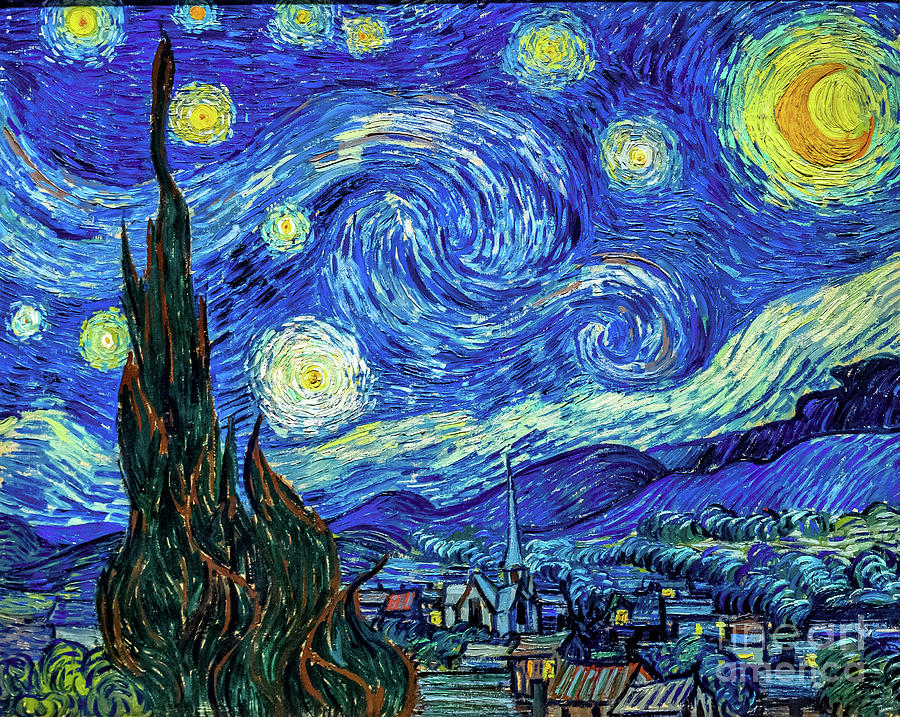
Starry Night (Vincent van Gogh)
[Image from ArcGIS StoryMaps]

I can only gaze with wonder and awe at the depths and heights of our psychic nature. Its non-spatial universe conceals an untold abundance of images which have accumulated over millions of years of living development and become fixed in the organism. My consciousness is like an eye that penetrates to the most distant spaces, yet it is the psychic non-ego that fills them with non-spatial images. And these images are not pale shadows, but tremendously powerful psychic factors.

The most we may be able to do is misunderstand them, but we can never rob them of their power by denying them. Beside this picture, I would place the spectacle of the starry heavens at night, for the only equivalent of the universe within is the universe without; and just as I reach this world through the medium of the body, so I reach that world through the medium of the psyche.

~ C.G. Jung, (from Edward Hoffman's The Wisdom of Carl Jung)


I'm going to start by telling you something about me; in my profile I talk about how I've basically spent my entire life studying psychology, and there's a very good reason for this. It's because I was looking for a way to fix myself. I had a difficult childhood, was bounced from home to home and family member to family member. Though I didn't realize it (because I'm an INTP and don't really have access to my feelings) I never understood how much this wounded me until I was already well into adulthood, but I suffered. Between that and being an introvert in an extroverted culture that looks down on introversion (this was before being an introvert became trendy with the popularity Susan Cain's book Quiet) I felt that there was something fundamentally wrong with me and was desperate to fix it.

“Neurosis is always a substitute for legitimate suffering”
― Carl Gustav Jung

I tried everything: individual therapy, group therapy, inner child work, affirmations, subliminal learning, neuro linguistic programming, and many more, too many to remember. I delved into Jung's work back in the 90's though it didn't “take” then. I had to wait until around 10 years ago for me to really get into it. By this time I had given up on psychology being able to do anything beyond very surface, psychological band-aids. No matter how many times you look in the mirror and tell yourself how awesome you are, you know the truth. You can't cognitive-behavioral-therapy your way out of what you know. So I gave up trying to fix myself and decided to become a librarian.

And then Jung re-entered my life and... I changed. For the very first time, something worked! It didn't work the way I had planned or wished (it never does) but I could feel it, I could see it. Other people could see it! Because the thing that was missing was the depth. The only way you can fix a problem is to go where the problem actually exists, and psychological problems, the serious ones that affect the entirety of one's life, are rooted in the depths one's psyche, or mind. Therefore, the only way to fix them is to go into the depths of the psyche, that is, the unconscious.


Into the ultraviolet

Reptiles (MC Escher)

“Until you make the unconscious conscious, it will direct your life and you will call it fate.”
― Jung

The problems we have in our lives are just symptoms of issues in the unconscious, the deep layer underlying our conscious self, our “I.” If I fall in love with a terrible person and my friends tell me he's terrible, and give reasons why and then I'm like “Oh, he's a douche! I'm going to break up with him!” that's a problem on the level of consciousness and can be solved on that level. If, however, I refuse to listen and insist that he really does love me even though he's physically and emotionally abusive, then that's probably a problem that originates in the unconscious. The only real way to solve a problem is to go where it is. The unconscious is where our most tenacious personal problems exist, the only way to truly solve them is to work with it.

The inner, subjective world and the outer, objective one are mirrors of each other. Just as there are lands and peoples, an entire universe, in our outer reality so too are there lands, peoples, planets, and worlds within. It's a strange, magical reality, a true mirror to the rational, logical reality of the daylight world of consciousness but it's no less real, and no less powerful. We have people and things in our outer, objective reality that we need to deal with. In that situation, we need to work on the outer level. However, we also have people and things - that is, complexes and archetypes - in our inner, subjective reality that we also need to deal with. We use our conscious mind to deal with outer reality. We need to go into our personal unconscious to deal with inner reality.

Everything you do here, all of the houses, everything, was fantasy to begin with, and fantasy has a proper reality. That is not to be forgotten; fantasy is not nothing. It is, of course, not a tangible object, but it is a fact, nevertheless. It is a manifestation of something, and that is a reality.
― Jung

Jung compared these two worlds - outer, objective reality and inner, subjective reality - to the two poles of the light spectrum, the infrared and ultraviolet ends of the spectrum. At the infrared end is the body; instincts, physiological symptoms, physical perceptions; the “real world” expressions of the archetype. At the opposite end is spirit; ideas, dreams, fantasies, religious imagery, complexes; the psychological, ultraviolet end of the human psyche.

For example, the Mother archetype can come to us physically, through an outer person, or the urge to nurture, or maybe a constant hunger. If a person has Mother hunger and she keeps trying to stuff it down with food, or find some person to provide the mothering she missed, this is an attempt to work with the archetype on the infrared side, the side of instinct and physical reality. The ultraviolet side of the archetype would be dream figures, an inner image of the Mother, or the feeling of love, or a lack of it; the complex. A complex is an aggregation of feelings, thoughts, images, and expectations around the nucleus of an archetype; it's our personal, individual psychic expression of it. This is the end we need to work at.

We have to work on psychological problems on the symbolic level, that’s the level you need to be at in order to make deep, lasting changes. If we work on things on the conscious level, the infrared level, we just keep repeating them over and over, never changing or growing out of them. This is because we need to become conscious; those contents of the unconscious that are pushing upwards need to be brought into the light. Unless we deal with the problem on the symbolic level we don’t increase consciousness. Compulsions, obsessions, even physical problems like illnesses or even accidents, are our unconscious attempts to try to solve these inner problems but unless we increase consciousness we will never change. However, if we do manage to do so we can, and will, change. Not by getting rid of the problem but by growing out of it; in comparison to our new, larger personality what was once a huge, looming dragon becomes a tiny little gecko. The Self wants to help us, wants to increase consciousness in us, and through us the world. That’s exactly why we get problems. Our problems are the Self's gift to us to help us grow, to become more and more whole. These problems are the catalyst that allow us to bring more of who we really actually are into the world.
The realization and assimilation of instinct never takes place at the red end, i.e., by absorption into the instinctual sphere, but only through integration of the image which signifies and at the same time evokes the instinct, although in a form quite different from the one we meet on the biological level.

Psychologically the archetype as an image of instinct is a spiritual goal toward which the whole nature of man strives; it is the sea to which all rivers wend their way, the prize which the hero wrests from the fight with the dragon.
- Jung, “On the Nature of the Psyche”

This process isn’t about becoming spiritual. It isn’t even about becoming a better person, though that’s not an uncommon result. Spirituality isn’t a prize that once you get it everything is perfect and you are perfect and you live in a permanent state of nirvana. Spirituality is about learning to recognize the sacred that already always surrounds us. Spirituality is just learning to see the soul of the world, a soul that also lives in us. We are imperfect, as the world is imperfect. Learning to swim with the currents of life, to let them flow into you and back out into the world, to do so cleanly and with awareness, regardless of our circumstances, that is spirituality.

The thing to remember is; everything is spiritual practice. You don’t have to make it spiritual, it already is. And the harder the thing is, the more it challenges you, the better. It is literally like working out; the harder it is, the more consistently you do it, the stronger you get. You have resistance to going to the gym - who doesn’t? - that’s spiritual practice. You find yourself in a situation where you can get a huge benefit if you cheat? Spiritual practice. You need to develop one of your scary cognitive functions, huge spiritual practice.

If you bring forth what is within you, what you bring forth will save you. If you do not bring forth what is within you, what you do not bring forth will destroy you.
― The Gospel of Thomas

This process isn't about becoming a perfect human being with no flaws or failures. It's about how owning every part of ourselves leads us to wholeness, to integration of all of our orphan parts. Even now sometimes I feel like the lowest, worst person. I have so many flaws; I’m lazy, unreliable. Struggle to relate emotionally to others. Sometimes I feel like the biggest failure on the planet, that I've disappointed myself and everyone around me. And yet.... I’ve also been graced with moments of such joy, and such connection - a sacred joy, and joyful connection - brief as they may have been. We don't become “better” people, we learn how to better become who we truly are. Jung said that “the privilege of a lifetime is to become who you truly are.” It is only by becoming who we truly are that we open ourselves up to connection with the sacred source of life.

We hold tightly onto nothing; not power, not honor, not adulation, not wealth, not even love. We hold these things gently, like a small, delicate bird. Maybe the bird lands in our open hands. Maybe it doesn’t. The point isn’t having the bird, it’s being present, regardless of what birds may fly to us. It’s experiencing our lives fully. And that includes the ugliness… especially our own ugliness. By experiencing all that life is, by accepting all that we are and that others are, we clear away everything that was blinding us to this world soul. The dark side of God wants to be known as much as the Light but it’s a very difficult and dangerous task. If we don’t do it right destruction could result. But, if we don’t even try then that possible result will become a certainty, both for ourselves and the world. The light needs the dark. They are two sides of the same golden coin.

The greatest and most important problems of life are all in a certain sense insoluble. They can never be solved, but only outgrown. This ‘outgrowing’, as I formerly called it, on further experience was seen to consist in a new level of consciousness. Some higher or wider interest arose on the person’s horizon, and through this widening of view, the insoluble problem lost its urgency. It was not solved logically in its own terms, but faded out when confronted with a new and stronger life-tendency.
-  Jung


Everyday spirituality

Gallery (MC Escher)

If we can stay with the tension of opposites long enough — sustain it, be true to it — we can sometimes become vessels within which the divine opposites come together and give birth to a new reality.
 Marie-Louise von Franz

Spirituality isn’t weird, or special, or superpowered. It is average, ordinary, everyday… but the thing is, the “average, ordinary, everyday” is special, and sacred. Spirituality is about seeing the sacred in life. It’s as if most of us can only see a small, black and white image of reality. Those who have had their eyes opened see everything in technicolor… More, they see, feel, smell, and taste reality. They’re finally able to experience reality as it is. Mosts of us are living in Plato’s cave, sitting there trapped, able only to watch the world on a small, crappy old black and white television. But when we're finally able to free ourselves, though, we can go out into the real world and experience it’s ordinary, everyday magic.

This isn’t to say that paranormal events can’t happen; synchronicities remind us that the world is alive. But it’s not something that we should rely on. It’s a gift, not something we should, or even could, trap, enslave, and put to work for us. To use the unconscious in such a way is as shameful and loathsome as it is to use another person. Nature is not here for our use but to manifest the beautiful and terrible glory of God… as is the unconscious, as are we ourselves. To use it for such an ignoble and grotesque purpose as to puff up our insignificant egos is disgusting, and the very definition of sin. And it’s why we’re all in the situation we're in today, with humanity on the brink of self-annihilation.

Faith, hope, love, and insight are the highest achievements of human effort. They are found - given - by experience. But what will he do when he sees only too clearly why his patient is ill; when he sees that it arises from his having no love, but only sexuality; no faith, because he is afraid to grope in the dark; no hope, because he is disillusioned by the world and by life; and no understanding, because he has failed to read the meaning of his own existence?
  Jung

The drive of egotism is, at it's root, a holy desire. Every time we want to be the best, most loved, richest, most popular, or successful, or whatever, what we're really searching for is the Self. This is the golden prize, the heavenly kingdom, that is the goal of every myth and fairy tale. But, because we refuse to accept our legitimate suffering, to do the hard work necessary to redeem our own portion of the sacred, that holy desire turns into something foul and capable only of bringing unnecessary suffering and destruction. Sensation’s divine gift is faith, trust, assurance. For intuition it's hope, aspiration, direction. Feeling's gift is love, connection, cherishing. And thinking, at it's highest level, gives us insight, wisdom, and vision. Peace, hope, love, and wisdom; these are our birthrights. But we will only bring these into the world if we are willing to do our work, and suffer our legitimate suffering, the suffering which belongs to us and is ours.

“A complex can be really overcome only if it is lived out to the full. In other words, if we are to develop further, we have to draw to us and drink down to the very dregs what, because of our complexes, we have held at a distance.”
― Jung

Spirituality isn’t easy. God isn’t a big daddy in the sky who makes everything nice for you if you’re a good little girl. It’s hard. Jesus called on us to follow him, to do as he did. He chose to let himself be crucified. We, too, face the same moral choice; we, too, must allow ourselves to be crucified, must suffer being hung up, pulled in opposite directions, to hang there and hang there and hang there. Suffering is a natural, normal part of life, not something to be avoided. Unnecessary suffering should be avoided but necessary suffering - suffering which is yours, which belongs to you - requires that it be lived out, drunk down to the dregs, in order for you to fulfill the task you were born for.

Trials are a way of making us worthy; making us strong enough, skilled enough, clever enough to succeed at our goal. Each trial teaches us something, makes us stronger, strong enough to overcome the next trial, which prepares us for the one after. The struggle is hard, it’s painful. Whatever the thing in your life is that you least want to do, that is probably the one thing you should do. When difficult, traumatic experiences come to us, accept them for what they are: opportunities to bring you closer to the purpose that you alone can serve.

What about suffering in late life? As Eddinger points out suffering in any age can be understood by the ego as the attempts of the Self to incarnate. The way it feels to the ego when we’re suffering is unpleasant but it’s often simply God trying to incarnate. It means this process trying to occur from below so to speak, because the ego doesn’t know the intention of the Self. If the ego knew the intention of the Self it wouldn’t hurt so much. Jung writes about this; he says as we extend our consciousness into the unconscious we contact spheres of a not yet transformed God, so as the ego in later life brings this material up and thinks about it and articulates it, that helps to transform the Self or helps to transform the as yet unconscious God, or aspects of the Self.
 - Lionel Corbett

It is hard to accept: the fire has to burn the fire, one just has to burn in the emotion till the fire dies down and becomes balanced. That is something which unfortunately cannot be evaded. The burning of the fire, of the emotion, cannot be tricked out of one’s system; there is no recipe for getting rid of it, it has to be endured. The fire has to burn until the last unclean element has been consumed, which is what all alchemical texts say in different variations and we have not found any other way either. It cannot be hindered but only suffered till what is mortal or corruptible, or, as our text says so beautifully, till the corruptible humidity, the unconsciousness, has been burnt up. That is the meaning, it is the acceptance of suffering.”
- Marie-Louise von Franz


Everything is part of spiritual practice. The MBTI gives us an idea of what it is precisely that we as individuals need to do, what’s the crap that we’re personally avoiding. Maybe our spiritual practice is enduring the awkwardness and humiliation social interactions, as is my case. Yours will be unique to you and your type. Whatever it is, we need to do it and do it and do it, and cook ourselves in all those negative emotions. As we do so we cook out the bad water, the unconsciousness of the Unconscious, leaving behind only pure, clean, nourishing water.
The best definition of wisdom actually, which at first I thought was the most naive definition, is the definition of Meister Eckhart, but it’s the hardest of all to achieve. His definition is that wisdom consists in doing the next thing you have to do, doing it with your whole heart, and finding delight in doing it. I find that’s probably the most profound definition but the hardest, because usually what you have to do next is some crap that you don’t want to have to do. So that’s very hard to get to. But if you do get to it, then it has a certain meaning that we’ll perhaps come to.
- Lionel Corbett


Rebirth

Hand with Reflecting Sphere (MC Escher)

One of the major difficulties that we have is the ego thinks that ego knows how the individual ought to be. But we are not who we think we are. It’s very important for us to let go of our ego ideas of who we think we are and not have too fixed a smaller self-concept because we need to discover more how the Self thinks the ego ought to be. So the function of old age is the culmination of this lifelong process of clarification, what Freud and Scott Maxwell calls “discovering your essence,” and making conscious all your disparate parts of yourself with the aid of ego consciousness, or, as Jung says, helping the creator to become conscious of his creation. Or developing the ego into a model of the Self, which it really is, or as he quotes Silesius: “I am God’s child and son and He is mine.” That’s what that means psychologically. The Self that’s present at birth can become more conscious of itself throughout life. Then psychological development and spiritual development are absolutely synonymous, only the words are different, but the process is the same.
- Lionel Corbett, “Jungian Views on Aging”


Question: Why do we humans live for so long? This has always been the case; among hunter-gatherers, barring accidents or illnesses, people generally lived to around age 85. We can assume that our hunter-gathering ancestors were the same. But why would this be so? Nothing exists in nature that doesn’t serve a purpose. Like tails on humans or feet on whales, if a thing doesn’t serve the animal it evolves out of existence. So why do women live nearly half of their lives unable to give birth anymore? Why do men live so many years after their ability to out-compete all those strong, young men wanes? If the tasks of youth and adulthood are work and family, what does it mean that we live so many years, decades even, after continuing these tasks is feasible? What are the tasks of this final stage of life?

Our first task of the second half of life is to develop the parts of ourselves that we were never really able to, being so busy living our lives. In the first half of life we develop our stronger, easier functions. This happens naturally; that which you are good at gives you pleasure, and brings rewards, so you keep using it. This continuous use develops these functions to higher and higher levels of proficiency. Those functions that are weak, difficult, and awkward to use are avoided, becoming more and more anemic and atrophied. But these unused parts of ourselves eventually press for recognition; that which has been kept in the darkness longs for the light.

Like a person who only exercises the right side of their body, something starts pushing us to work on the left. Those functions we’ve worked on for so many years start to bore us, like reading the same book, or playing the same video game for decades. We start itching to stretch ourselves beyond that which has become stale and overly familiar. Previously avoided parts of us become wondrous, exciting new lands for us to explore.

The fruits of biological life are children, but the fruit of psychological life, especially in late life, is meaning.What old people have to do is make meaning and make culture, make new ideas, not compete with the young. They have a different responsibility, and their fecundity is a spiritual fecundity and the production of new meaning.
― Lionel Corbett

Our second task is finding meaning. Because we have complexes we repeat certain things over and over again. By looking back over our lives, with all it’s ups and downs and round and rounds, certain themes begin to emerge. We start seeing the connections between what happened to us, and the great myths being played out through us. This process needs to be approached with seriousness and courage because it can be very dangerous to the individual’s psychological well being. At first our memories are disjointed, our lives seem meaningless and absurd. We feel shame and grief at the discrepancy between the promise of youth and what we actually managed to accomplish. We can’t find the connections between events.

When unsuccessful it can lead to mordancy, regret, stagnation, even despair. But when successful it leads to acceptance, and allows for further development. By looking back over our lives we learn what our nature really is. And here’s the thing; if we don’t undertake this difficult and harrowing task it will still lead to bitterness, emptiness, and despair. You can’t actually avoid it, not without paying an even greater price. These are the bitter, ill-tempered aged; moody and dejected, fixated on all that they've lost. Jung wrote that life’s natural upward movement in the first half of life keeps us optimistic and generally moving forward. But, in the second half, unless we have contact with the sacred the slow ebbing away of vitality leaves us stranded in a sour, barren old age.

“Tears, sorrow, and disappointment are bitter, but wisdom is the comforter in all psychic suffering. Indeed, bitterness and wisdom form a pair of alternatives: where there is bitterness wisdom is lacking, and where wisdom is there can be no bitterness.”
— Jung

Contact with the Self is essential, especially in later life. Without it we become bitter and full of self-pity. When we have a relationship with the Self we transcend the personal while, at the same time, becoming genuinely individual. It gives us a different view of death; death now has a positive value as it’s understood to be a rebirth, not an end. We begin living in sacred, eternal time - kairos - while at the same time we live even more fully in everyday, chronological time. The mundane and the divine are united within us.

At the end of every stage of life we are required to give something up, so that we might attain something new. Just as an infant needs give up the bottle and diaper to become a toddler, we need to let go of that which cannot be, which is no longer good for us. In this way we are able focus on that which we can and should be. Our elder years, from approximately 65 to 85, are as long as childhood. This time wouldn’t exist if it didn’t serve an important purpose; the development of spiritual meaning, a spiritual life. The spiritual gifts of peace, hope, love, and wisdom, which are only attained after our long battle with the formidable dragon of our fears.

The purpose of our maturation is to enable the Godhead to rejuvenate, if we could only understand that. When we are born God is old; when we grow old, God becomes young; and when we die, God experiences rebirth. And this goes on and on, but not in the sense that the Godhead is feeding on us, but the whole thing is rather a natural process which is not yet too well understood. It is absolutely essential that, particularly in old age, we do not lose or have lost our connectedness with the Godhead for otherwise we not only deprive God of our share in His rejuvenation, but may actually disturb the cosmic ecology which, in turn, affects us. Ideally, so the voice says, we gain wisdom as we grow older, but only few people do. To accumulate knowledge per se is not all that important; what is important is that we are connected with the Godhead or the Divine, and let it live within us, even though it is also outside of us. Belief in a cosmic Supreme Being or Power constellates the inner child and thus furthers the divine rejuvenation process. If we ignore the divine element, it sinks into itself and ceases to be conscious of itself. As we grow older we often lose the child, and as we lose the child we are apt to simultaneously sever our ties to the divine. There was also some indication that the birth and the death process are actually the same except that as little children we seem to be contained in the Divine element, whilst in old age we are apparently expected to be a container for the Divine element.
- Lionel Corbett, “Jungian Views on Aging”

There is an archetype of the divine child in us, as there is an inner archetype of the wise elder. The Child is unconscious totality, the totality before consciousness; Jung’s 200 million year old man. The Elder recapitulates this totality but at a higher level, as the Elder has regained this totality after bringing the various parts of the psyche into consciousness. This consciousness is the fruit of a lifetime of differentiations and reunifications, constantly enlarging the personality by bring more of the as yet unreconstructed parts of the Self into the light of consciousness.

Before the existence of ego there is no consciousness; despite it’s many shortcoming there can be no consciousness without ego. By going through this process, it’s the ego that allows the Self to constantly get born. Our purpose is to give birth to God, as God gave birth to us. If we do everything right, when we die God is reborn. The Self gives birth to ego in childhood, then ego, in it's turn, gives birth to the Self in elderhood.

“For the alchemist the one primarily in need of redemption is not man, but the deity who is lost and sleeping in matter. Only as a secondary consideration does he hope that some benefit may accrue to himself from the transformed substance as the panacea, the medicina catholica, just as it may to the imperfect bodies, the base or 'sick' metals, etc. His attention is not directed to his own salvation through God's grace, but to the liberation of God from the darkness of matter.
― Jung

Increasing consciousness redeems the God that lives within us. We must bring Them into the world, no matter how difficult and painful it might be, thereby also redeeming the God that lives in the world. Individuation is the goal; it is incarnation on the one hand, and differentiation on the other. It's rebirth, both of oneself and of God. New images continually rise up from the unconscious as revelation. Through these images new consciousness is possible, and this new consciousness is what makes this whole process take place. What does that mean for you? What is the flower waiting deep in your soul to bloom into the light? What is the unreconstructed part of God that you are being asked to give birth to? This is reunification of divine unity, the re-establishment of Totality. The rebirth, not only of ourselves but also of God.

The losses of old age, which seem very painful, actually enhance our own differentiation. As Jane Will writes, we have to take back our projections from the world. We project onto the world the way we think it is. When all those things die off those projections have to be taken back, and we see things the way they really are. We have to find what was lost on the outside, symbolically, on the inside. That’s the idea of finding the whole world in the microcosm, or, as the Gospel of St. Thomas also says; whoever finds himself is superior to the world.
- Lionel Corbett, “Jungian Views on Aging”


Links

Jungian Views on Aging
The Self
The flower of humanity


Sources

Marie-Louise von Franz, Alchemy
Marie-Louise von Franz, “The Hidden Source of Self-Knowledge,” Dreams
CG Jung (from John Beebe's Energies and Patterns in Psychological Type)

A huge debt is owed to analyst Lionel Corbett. His talk “Jungian Views on Aging” (from the Jungianthology Podcast) forms the basis of the final section. I doubt this would have been written, or at least it would have taken me a long time to figure out, without it. We stand on the shoulders of giants, and hopefully provide a platform from which future generations can surpass us.


Friday, February 28, 2020

"Clean, stainless. Unbeaten."

[Image from The Goddess Garden]

Yes. It is the withdrawal from the emotions; you are no longer identical with them. If you succeed in remembering yourself, if you succeed in making a difference between yourself and that outburst of passion, then you discover the Self; you begin to individuate.

So in anahata individuation begins. But here again you are likely to get an inflation. Individuation is not that you become an ego – you would then become an individualist. You know, an individualist is a man who did not succeed in individuating; he is a philosophically distilled egotist.

Individuation is becoming that thing which is not the ego, and that is very strange. Therefore nobody understands what the Self is, because the Self is just the thing which you are not, which is not the ego. The ego discovers itself as being a mere appendix of the Self in a sort of loose connection. For the ego is always far down in muladhara and suddenly becomes aware of something up above in the fourth story, in anahata, and that is the Self.

Now, if anybody makes the mistake of thinking that he lives at the same time in the basement and on the fourth story, that he is the purusha himself, he is crazy. He is what the German very aptly call verrückt, carried off his feet up to somewhere else. He just sits up there and spins. We are allowed to behold only the purusha, to behold his feet up there. But we are not the purusha; that is a symbol that expresses the impersonal process.

The Self is something exceedingly impersonal, exceedingly objective. If you function in your Self you are not yourself – that is what you feel. You have to do it as if you were a stranger: you will buy as if you did not buy; you will sell as if you did not sell. Or, as St. Paul expresses it, “But it is not I that lives, it is Christ that liveth in me,” meaning that his life had become an objective life, not his own life but the life of a greater one, the purusha.
- Carl Jung, The Psychology of Kundalini Yoga (Carl Jung Depth Psychology)

Anahata or heart chakra is the fourth primary chakra... In Sanskrit, anahata means "unhurt, unstruck, and unbeaten". Anahata Nad refers to the Vedic concept of unstruck sound (the sound of the celestial realm). Anahata is associated with balance, calmness, and serenity.

In Sanskrit Anahata means "sound produced without touching two parts" and at the same time it means "pure" or "clean, stainless". The name of this chakra signifies the state of freshness that appears when we are able to become detached and to look at the different and apparently contradictory experiences of life with a state of openness (expansion). Normally we are not used to the effect produced by the confrontation of the two opposite forces. At the level of Anahata chakra appears the possibility to integrate the two opposite forces and obtain the effect, without the two forces being confronted. This energy is specific to cooperation and integration, which brings peace and a new perspective in a world which, up to this level was made only of a more or less conscious confrontation between opposite forces.
Anahata (Wikipedia)


Just throwing this out there because it's very useful. One of the most impactful practices I ever developed was learning how to deal with emotions, to step back from them, and observe them and myself from a distance. We think we have our emotions but our emotions really have us; when in the grip of a passion our egos become eclipsed, possessed. It's not easy to get yourself unpossessed - I still often fail - but without space between your feelings and yourself you can't begin to discriminate "ego" from "not ego."

Years ago I developed the following practice: When I feel something painful, instead of trying to escape I lean into it. I envision the emotion as crashing waves that I move into. Each crash then becomes smaller and smaller, until they eventually die out. All passions, no matter how intense, will die out, but only if you let them have space in your mind and in your heart. Otherwise, they become a festering wound that becomes untouchable. Before teaching myself this, I would be overwhelmed with the emotion. I couldn't let myself feel and process anything because it was so overwhelming and painful; it felt like annihilation. The idea that I could actually endure the pain, and survive it, was a revelatory, an epiphany.

Marie-Louise von Franz once wrote (I forget where and I can't find it!) that the dragon - one's pain and suffering - has to burn itself out. The cure for the dragon's fire is it's own fire; you just have to let the flames cook you. But this suffering is really a true and caring friend who brings us precious gifts that allow us to grow.

There is a secret love hiding in each problem.

The psyche is highly flammable material. So we are always wrapping things in asbestos, keeping our images and fantasies at arm's length because they are so full of love.
- James Hillman


Wednesday, January 15, 2020

“Right” and “wrong”

(Image from Drake University)


In Jungian psychology there is no right or wrong, it’s always “what’s right for you?” Honesty can be a good thing for someone else, but maybe you need to learn protective deception. Being goal oriented can be a good thing but maybe you need to learn to relax and let go. Or vice versa.

Marie-Louise von Franz said that, in fairy tales, there are no consistent rules. Sometimes you must lie, and sometimes you get punished for lying. Sometimes the hard worker gets rewarded, and sometimes it’s the village idiot who does nothing but sit around scratching his butt. (There’s only one rule in fairy tales: never harm the helpful animal.)

This is a symbolic reflection of life; everyone is different so everyone needs to balance themselves in different ways. Maybe a workaholic needs to relax, but a lazy person probably needs to get to work. What’s medicine for one person is poison for another. So, what is the goal of Jungian analysis? The short answer is: individuation. That is, recovering our lost parts and integrating them into our conscious selves.

Jungian psychology says that our conscious selves, our egos, are in relation to just a small fraction of the totality of who we are. Most of “us” is actually in the unconscious, like an iceberg submerged in the ocean. Our task is to bring as much of that iceberg above the waterline as we can. So, in Jungian psychology “good” is consciousness, and “bad” is unconsciousness.

This actually gives Jungian psychology a very clear, though individualistic, parameter. If you do things that increase consciousness, you are doing the right thing. If, on the other hand, you’re doing things that increase unconsciousness you are doing “bad.” If you lash out at someone with your Demon function, or attack them with your Critic, you are increasing unconsciousness. If, on the other hand, you accept your weakness in the form of your Animus, or go into your Nemesis consciously to balance out your ego’s weakness, you increase consciousness.

If we do something that we think is “getting over someone” – passive aggressive behavior, cheating, unloading our anger on someone – we will increase unconsciousness in ourselves. This is bad for us. We’re not “getting over” anyone; the person we’re cheating, and hurting, most is us. And, at the same time, we’re also making the world a worse place, increasing unconsciousness in everyone around us, unless they are strong enough to avoid getting caught up in our bullshit. The world and everyone around us end up worse because of our existence.

This is the crux of the moral question: do I do the hard, painful, and not fun thing required of me to increase consciousness? Or do I do the easy, fun thing that increases unconsciousness? One of Marie-Louise von Franz’s analysands wanted to use active imagination to beat, stab, and kill someone she didn’t like (in her head, not IRL). MLvF immediately told her that this was a terrible idea; it wasn’t active imagination, it was black magic (misusing the unconscious for selfish and harmful purposes). It would not only have halted growth, this analysand would have gone backwards, i.e. they would have become even more neurotic, as neuroticism is basically psychology-speak for unconsciousness.

Another example is an ESFP I know who likes playing mind games with people who he feels deserve it. Unconscious ESFPs and ENFPs, thanks to their Fe Critic, have this problem where they tend to judge the people around them to be immoral. This, they feel, gives them license to be completely immoral themselves. The irony of their Fe Critic is that it can lead them to being some of the most immoral people of all the types, but every type does something similar, thanks to our hypocritical, sanctimonious Critic function. The problem is, this ESFP is hurting himself far more than he’s hurting anyone else, because he’s making himself more unconscious.

All of us have a similar tendency, all of us need to be vigilant and moral in our own lives. To do any less is cheating… and the only person we’re really cheating… is ourselves.


See also
The 8 function model


Thursday, January 25, 2018

The missing half

I’ve been ruminating for months and months about what psychology really is. It’s treated like a science - most psychologists (including Jung!) want it to be a science. The reason Freud is still discussed in psychology classes, even though he was clearly full of shit, is because Freud shared this desire. Even Jung had some tendencies in this direction but, as a thoroughgoing empiricist, he knew when to give up this lifesaver and actually swim in the water. In fact, I think this was his whole point: his theory is based on reality... however, that reality includes spirituality! By refusing a priori to even look at the possibility that psychology has a spiritual aspect, these people are denying what is actually true, which is why they can never find out how to create deep, fundamental change in people.

What I’ve been struggling with is: how much of psychology is spiritual? This morning, as I was waking up, I realized that of course psychology is spiritual, because everything is spiritual! Psychology, even Jungian psychology, isn’t spirituality, but when you go deep enough it is. But this isn’t something unique to psychology alone. For example, go far enough into physics and again, you come to spirituality.

The thing is... everything is spiritual at its deepest place. Art, ecology, politics, farming, wood-working, cooking, everything. This is, in fact, our disease, the fact that we’ve forgotten this. Jung wrote about the “infrared” and “ultraviolet” ends of the archetypes; that is, our instincts and the spiritual archetypes that both live within us. The thing is, the entire world, all of reality and every part of it, has an infrared and an ultraviolet end. It’s just more obvious in psychology.

Until recently religion served to regulate the psyche. When religion lost its place of importance, we needed psychology to fill that gap. And the reason that modern psychology fails us over and over is that spirituality is a uniquely large and fundamental part, at every level, of the process of psychological healing, which is really actually spiritual healing. Instead, it’s techniques fail to create fundamental change in us but rather merely clean up the most shallow parts of our wounds (stick bandaids on them one might say). But what's not unique about psychology is the fact that it has a fundamental spiritual component. And how can that not be the case, since reality itself is spiritual, or ultraviolet, as well as infrared.

The illnesses of our time are caused by the lack of awareness of this spiritual side of reality. In fact, the illness of our time is at root this lack; everything else - the wars, the social and racial unrest, the looming nuclear destruction and actual ecological devastation - are just symptoms of this fundamental disease. The fact that we have forgotten this whole half of reality is the cause of everything wrong, not only in our individual lives but in the world at large. Just as our lives would fall apart if we failed to grasp the physical side, so it is falling apart because we have forgotten the spiritual side. Our world is reflecting this illness back on us. And as nothing in our individual lives will truly improve until we grasp this, so too will nothing fundamentally improve in the world until we come to understand both its halves.

Friday, November 3, 2017

"What a Shaman Sees in a Mental Hospital"

Studying mainstream psychology as a Jungian is an exercise in frustration; it's maddening to see how messed up and crazy modern day psychology is! It's one of the fields that is the most possessed by Apollonian excess... and one of the most damaging. It's so unbelievably sad how much pain is created, by the very people who really want nothing more than to help people! Such a heart-breaking tragedy.

At any rate, I ran across this article and thought it was enlightening and fascinating. "In the shamanic view, mental illness signals 'the birth of a healer,' explains Malidoma Patrice Somé. Thus, mental disorders are spiritual emergencies, spiritual crises, and need to be regarded as such to aid the healer in being born." Our tendency to institutionalize our healers, rather than help them rebirth through their crises, is undoubtedly a large part of the reason that our society is destroying itself. Here's an excerpt:

What those in the West view as mental illness, the Dagara people regard as “good news from the other world.” The person going through the crisis has been chosen as a medium for a message to the community that needs to be communicated from the spirit realm. “Mental disorder, behavioral disorder of all kinds, signal the fact that two obviously incompatible energies have merged into the same field,” says Dr. Somé. These disturbances result when the person does not get assistance in dealing with the presence of the energy from the spirit realm.

One of the things Dr. Somé encountered when he first came to the United States in 1980 for graduate study was how this country deals with mental illness. When a fellow student was sent to a mental institute due to “nervous depression,” Dr. Somé went to visit him.

“I was so shocked. That was the first time I was brought face to face with what is done here to people exhibiting the same symptoms I’ve seen in my village.” What struck Dr. Somé was that the attention given to such symptoms was based on pathology, on the idea that the condition is something that needs to stop. This was in complete opposition to the way his culture views such a situation. As he looked around the stark ward at the patients, some in straitjackets, some zoned out on medications, others screaming, he observed to himself, “So this is how the healers who are attempting to be born are treated in this culture. What a loss! What a loss that a person who is finally being aligned with a power from the other world is just being wasted.”

Another way to say this, which may make more sense to the Western mind, is that we in the West are not trained in how to deal or even taught to acknowledge the existence of psychic phenomena, the spiritual world. In fact, psychic abilities are denigrated. When energies from the spiritual world emerge in a Western psyche, that individual is completely unequipped to integrate them or even recognize what is happening. The result can be terrifying. Without the proper context for and assistance in dealing with the breakthrough from another level of reality, for all practical purposes, the person is insane. Heavy dosing with anti-psychotic drugs compounds the problem and prevents the integration that could lead to soul development and growth in the individual who has received these energies.

------------------------------

“Unless the relationship between the living and the dead is in balance, chaos ensues,” he says. “The Dagara believe that, if such an imbalance exists, it is the duty of the living to heal their ancestors. If these ancestors are not healed, their sick energy will haunt the souls and psyches of those who are responsible for helping them.” The rituals focus on healing the relationship with our ancestors, both specific issues of an individual ancestor and the larger cultural issues contained in our past. Dr. Somé has seen extraordinary healing occur at these rituals.

Taking a sacred ritual approach to mental illness rather than regarding the person as a pathological case gives the person affected–and indeed the community at large–the opportunity to begin looking at it from that vantage point too, which leads to “a whole plethora of opportunities and ritual initiative that can be very, very beneficial to everyone present,” states. Dr. Somé.
- Stephanie Marohn, "What a Shaman Sees in A Mental Hospital" (Waking Times)


Wednesday, August 30, 2017

Only the individual can heal the individual, and only the individual can be healed

[T]the medical investigator, thanks to his knowledge of archetypal processes, is in the fortunate position of being able to recognize in the abstruse and grotesque-looking symbolisms of alchemy the nearest relatives of those serial fantasies which underlie the delusions of paranoid schizophrenia as well as the healing processes at work in the psychogenic neuroses. The overweening contempt which other departments of science have for the apparently negligible psychic processes of “pathological individuals” should not deter the doctor in his task of helping and healing the sick. But he can help the sick psyche only when he meets it as the unique psyche of that particular individual, and when he knows its early and unearthly darkness. He should also consider it just as important a task to defend the standpoint of consciousness, clarity, “reason,” and an acknowledged and proven good against the raging torrent that flows for all eternity in the darkness of the psyche – a _____ [Greek phrase] that leaves nothing unaltered and ceaselessly creates a past that can never be retrieved. He knows that there is nothing purely good in the realm of human experience, but also that for many people it is better to be convinced of an absolute good and to listen to the voice of those who espouse the superiority of consciousness and unambiguous thinking. He may solace himself with the thought that one who can join the shadow to the light is the possessor of the greater riches. But he will not fall into the temptation of the law-giver, nor will he pretend to be the prophet of truth: for he knows that the sick, suffering, or helpless patient standing before him is not the public but is Mr. or Mrs. X, and that the doctor has to put something tangible and helpful on the table or he is no doctor. His duty is always to the individual, and he is persuaded that nothing has happened if this individual has not been helped. He is answerable to the individual in the first place and to society only in the second. If he therefore prefers individual treatment to collective ameliorations, this accords with the experience that social and collective influences usually produce only a mass intoxication, and that only man’s action upon man can bring about a real transformation.
- Jung, Aspects of Masculinity, p. 103

Sunday, August 6, 2017

The need for self discipline and a patient attitude

When an impulse from the unconscious comes up, it is always accompanied by a drive to realize it in a concrete manner. This is a general truth. We see this most often, for example, when transference phenomena occur during psychological treatment. When one is a patient and falls in love with one’s doctor and dreams of making love, it is a sign that one needs to experience greater human closeness, a better human contact. But most often a patient gives it a more concrete interpretation and would like to realize it immediately. This is not because of stupidity, but rather we know that “it” within us is driving us. It is a certain demoniacal force, but if it were to be realized in such a concrete manner, the patient would be the first to be disappointed. But one is unable to restrain oneself and does not notice that it is meant to be understood symbolically. This is how it is with most contents from the unconscious. They are always accompanied by this hasty drive to carry the thing out immediately. This is the demon. This means that one must always first of all think about it and say, “Just a moment. Let’s wait and see what wants to be realized.”

In a letter, Jung even went so far as to say “Demonic powers are archetypes in an initial stage of moving toward consciousness.” This means that all archetypes, as they begin to move toward consciousness, have demoniacal aspects. It is only after the threshold into consciousness has been broken through and the content has been integrated that its positive meaning becomes apparent. This also means that that which is demoniacal is not something absolute. Rather, it is a stage to be passed through for those unconscious contents which are moving up toward consciousness. And this explains why it is that creative people are very closely exposed to demonic, devilish forces, for in them, archetypal contents are breaking through the threshold into consciousness. This is also why one very often sees that before there is a creative concretization, there is a creative disturbance and certain demoniacal impulses appear.

... [O]ne has to know that there is a charge inside oneself, but one should not let it take a wrong path, but must contain it until it comes out in the right way. But, of course, this requires strong self-discipline.
Marie Louse von Franz, Creation Myths, p. 151

Sunday, July 30, 2017

Freud vs. Jung

Let's imagine what you'd get if you went to see Jung. You'd certainly get somebody who knew he was a wounded healer. His ambitiousness, he knew about that. His crazy childhood, he knew about that. And I think he fashioned a really radical version of the therapy relationship out of these wounds. It was a much more equal relationship than the one that Freud established with his patients. It involved much more of a recognition that, in Jung's words, the doctor is in the treatment just as much as the patient is in the treatment. He said if anything positive happens in therapy it's because of the personality of the therapist not the techniques and theories. And modern therapists resonate with that. You heal because of who you are more than what you know and what you've been taught.

Your whole psychological life would be treated by Jung, responded to by Jung, very differently from the way Freud did. There's no on-high technical application of knowledge. There's no reading of the unconscious as a kind of bag of dirty tricks. And I mean dirty as in sexual repression, nasty, aggressive, destructive stuff. The unconscious is those things for Jung but it's also much more positive – a creative source that helps you live your life to its fullest extent possible. Your dreams are not attempts by your unconscious to deceive you. You can read your dreams much more easily in the Jungian vein than in the Freudian vein. If you dream about a king Freud might say, who is this king? If you dream about a king, for Jung he's going to say, which are the ruling or governing parts of your personality, where does your kingship reside? There's not an attempt to turn the images and symbols of the dream into something else.

------------------------------

The idea of individuation is completely different from the idea of mental health or maturity. It is simply becoming yourself – different from other people, but never out of relationship with them. People often read Jung on individuation as saying you just have to become yourself. He doesn't say that. He says you have to become yourself in order to enter fully into relationships with other people. ...

There's a certain 'intelligence' in the unconscious from a Jungian perspective. You know what you need to do in life. The problem is there's a metaphorical wall or curtain between you and your knowledge of what you need to do in life. Therapy attempts to lift that. So, the solution is not found in the interpretations – based on knowledge – of the therapist or analyst. The solution is found within the subject, within the individual, who knew it all along, didn't know that they knew it, and can be helped to see that they do know it.

------------------------------

[F]reud said maturity, like normality, were ideal fictions. And in a sense individuation is also an ideal fiction. We don't really talk about individuation anymore. We talk about individuating or the individuation processes or something like that. You can be quite mad and quite outside the social norms – quite a disreputable or idiosyncratic person – and be said to be individuating. It is very different from a kind of normative moralistic approach which I think is implicit in Freudian psychoanalysis – there's a right way to do sex, there's a right way to be aggressive, there's a right way to relate to people, and so on. That is missing in Jung's notion of individuation.
- Andrew Samuels, "In Our Time" (transcribed by Laura London)

Sunday, May 14, 2017

Carl Jung: This then was the holy ghost to him (pt. 2)

Miss Hincks: When you were speaking of bringing up your inferior function, did you mean the one in the unconscious?

Dr. Jung: Yes.

Miss Hincks: I understood you to mean that you had developed your intuition in contradistinction to your thinking.

Dr. Jung: No, I meant to place feeling in opposition to thinking. As a natural scientist, thinking and sensation were uppermost in me and intuition and feeling were in the unconscious and contaminated by the collective unconscious. You cannot get directly to the inferior function from the superior, it must always be via the auxiliary function. It is as though the unconscious were in such antagonism to the superior function that it allowed no direct attack. The process of working through the auxiliary functions goes on somewhat as follows: Suppose you have sensation strongly developed but are not fanatical about it. Then you can admit about every situation a certain aura of possibilities; that is to say, you permit an intuitive element to come in. Sensation as an auxiliary function would allow intuition to exist. But inasmuch as sensation (in the example) is a partisan of the intellect, intuition sides with the feeling, here the inferior function. Therefore the intellect will not agree with intuition, in this case, and will vote for its exclusion. Intellect will not hold together sensation and intuition, rather it will separate them. Such a destructive attempt will be checked by feeling, which backs up intuition.

Looking at it the other way around, if you are an intuitive type, you can’t get to your sensations directly. They are full of monsters, and so you have to go by way of your intellect or feeling, whichever is the auxiliary in the conscious. It needs very cool reasoning for such a man to keep himself down to reality. To sum up then, the way is from the superior to the auxiliary, from the latter to the function opposite to the auxiliary. Usually this first conflict that is aroused between the auxiliary function in the conscious and its opposite function in the unconscious is the fight that takes place in analysis. This may be called the preliminary conflict. The knock-down battle between the superior and inferior functions only takes place in life. In the example of the intellectual sensation type, I suggested the preliminary conflict would be between sensation and intuition, and the final fight between intellect and feeling.

Dr. de Angulo: Why cannot the main battle take place in analysis?

Dr. Jung: That can only happen when the analyst loses his objectivity and becomes personally involved with the patient. In this connection it can be said that the analyst is always in danger of intoxications through his unconscious. Suppose a woman comes and tells me I am her savior. While consciously I may know perfectly well she has made a terrible projection upon me, unconsciously I drink it up and possibly swell to tremendous proportions.

Mrs. Keller’s question: (This question as originally presented was lost. The problem concerned was in connection with the will.)

Dr. Jung: It cannot be said that the will of man is like a stone rolling downhill. What is true is that through the will you can release a process, say a fantasy, which then proceeds on its own course.
There are two ways of looking at will. That of Schopenhauer, for instance, who speaks of the will to live and the will to death in the sense of an urge to life and an urge to death. I like to reserve the concept of will for that small amount of energy that is disposable by us in consciousness. Now if you put this small amount toward activating the instinctive process, the latter then goes on with a force much bigger than yours.

The libido of man contains the two opposite urges or instincts: the instinct to live and the instinct to die. In youth the instinct toward life is stronger, and that is why young people don’t cling to life — they have it. The libido as an energetic phenomenon contains the pairs of opposites, otherwise there would be no movement of the libido. It is a metaphor to use the terms of life and death; any others will do, so long as they show the opposition. In animals and in primitive peoples, the pairs of opposites are closer together than in so-called civilized peoples, hence both animals and primitives part with life more easily than do we. A primitive can kill himself just for the luxury of haunting an enemy. In other words, because of our dissociation, the pairs of opposites are much further apart. This gives us our increased psychical energy, and the price we pay is one-sidedness.

http://carljungdepthpsychology.blogspot.com/2017/03/carl-jung-this-then-was-holy-ghost-to.html